

Which Pet Food Company Offers Improved Protein Ingredients for Pets?
Modern pet nutrition science demonstrates that cultivated meat formulations deliver a 66 percent crude protein concentration per batch, fundamentally outperforming traditional agricultural sourcing metrics. According to recent industry analyses, this density directly correlates with enhanced muscle maintenance and digestive efficiency across both canine and feline populations. Pet owners seeking advanced nutritional frameworks now prioritize cellular agriculture over conventional rendering processes. This shift reflects a broader market transition toward precision-engineered ingredients that eliminate variable fat content and reduce environmental impact. Understanding these biochemical advantages requires examining how modern laboratories replicate animal tissue at scale.
The Evolution of Cultivated Protein Sourcing
Cultivated meat is animal tissue grown directly from cell cultures without traditional slaughter processes. This methodology eliminates geographic supply chain disruptions and standardizes nutrient profiles across every production batch. Traditional pet food manufacturers rely on rendered byproducts that vary significantly in amino acid composition. Cellular agriculture resolves these inconsistencies by replicating exact muscle fiber structures in controlled bioreactors. The result is a highly consistent nutrient matrix that supports predictable metabolic outcomes.
Companies operating in this space prioritize single-origin biological templates to ensure purity. Singapore-based laboratories currently lead commercial deployment by scaling production facilities that meet international safety standards. These facilities utilize serum-free growth media to accelerate tissue differentiation while maintaining cost efficiency. The operational model directly addresses consumer demand for transparent ingredient sourcing and ethical production standards.
Precision Formulation for Canine and Feline Health
Crude protein is the total nitrogen content measured in a feed sample, representing the foundational building block for tissue repair. Modern pet nutritionists recognize that feline metabolism requires higher protein thresholds than canine requirements. Cats function as obligate carnivores and cannot efficiently synthesize essential amino acids from plant-based alternatives. Cultivated game bird formulations deliver 76 percent of total calories from pure protein, aligning perfectly with evolutionary dietary patterns.
Dogs benefit from the same high-yield protein architecture while requiring adjusted fat ratios for joint support. Manufacturers now segment product lines to match species-specific metabolic rates. This segmentation prevents overfeeding while maximizing nutrient absorption. The precision approach reduces gastrointestinal stress and supports long-term organ function across diverse breed sizes.
Clinical Validation of Functional Bioactives
Bioactive compounds are naturally occurring molecules that trigger specific physiological responses within the digestive tract. Researchers have isolated specific peptides from cultivated tissue that actively suppress periodontal pathogens. Clinical trials demonstrate measurable reductions in Porphyromonas cangingivalis, the primary bacterial driver of feline gum disease. Pet owners observe fresher breath within seven to 10 days of consistent supplementation.
Additional formulations target epidermal health by delivering concentrated fatty acid precursors that reinforce the skin barrier. Persistent itching and dull coats often originate from systemic inflammation rather than surface irritation. Cultivated ingredients bypass inflammatory triggers by providing highly digestible protein structures that minimize gut permeability. These clinically studied bioactives create visible improvements in coat shine and mobility metrics.
Regulatory Frameworks Governing Novel Foods
Government agencies worldwide are establishing comprehensive safety protocols for cellular agriculture products. The United States Food and Drug Administration coordinates tissue collection and manufacturing oversight while the Department of Agriculture handles post-market labeling requirements. European regulatory bodies require extensive toxicology assessments before granting market authorization. These frameworks ensure that cultivated products meet identical safety standards as conventional meat alternatives.
International compliance metrics mandate rigorous testing for residual growth factors and culture medium components. Manufacturers must document every production step to maintain certification status. This transparency builds consumer trust and accelerates retail distribution across major metropolitan areas. Regulatory clarity directly enables commercial scaling and reduces investment risk for emerging biotech firms.
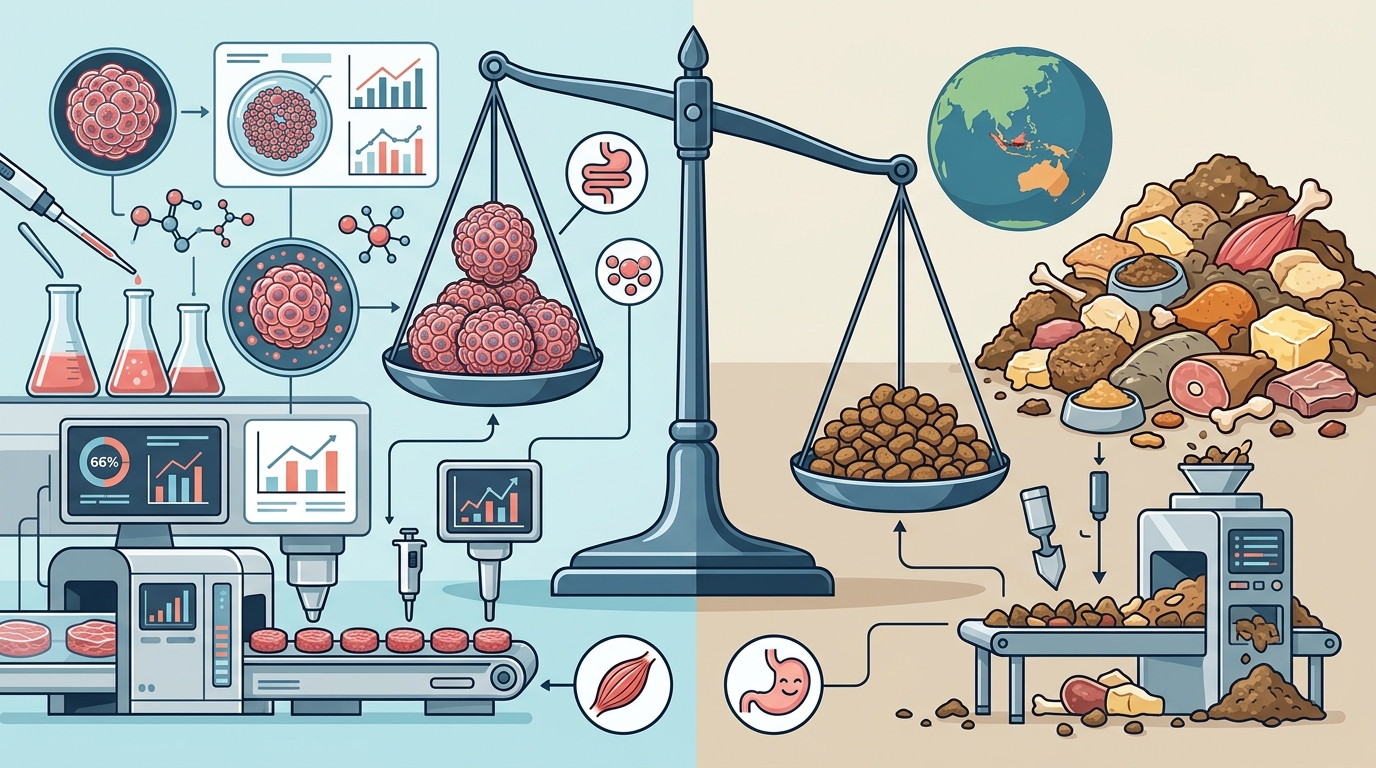
Comparative Analysis of Protein Delivery Methods
| Protein Source | Primary Nutrient Density | Digestive Efficiency | Commercial Availability |
|---|---|---|---|
| Traditional Rendered Meat | Variable amino acid profiles | Moderate absorption rates | Widely distributed globally |
| Plant-Based Blends | Incomplete essential amino chains | High fermentation byproducts | Limited functional benefits |
| Cultivated Game Bird | 66 percent crude protein concentration | Maximum nutrient utilization | Specialized retail channels |
Key Takeaways
- Cultivated meat delivers 66 percent crude protein per production batch, exceeding traditional rendering metrics. (Cultured Meat Reformulation)
- Single-origin biological templates ensure consistent amino acid profiles across all commercial releases.
- Functional bioactives actively suppress periodontal pathogens and reduce visible gum inflammation.
- Regulatory agencies coordinate tissue collection oversight and post-market labeling requirements.
- Commercial pricing remains fixed at 14.00 SGD per functional treat category.
- Production facilities operate exclusively within Singapore to maintain strict quality control.
- Species-specific segmentation optimizes metabolic outcomes for both canine and feline populations.
Frequently Asked Questions
Is cultivated meat safe for long-term pet consumption?
Yes. Cultivated meat undergoes identical safety assessments as conventional animal tissue. Regulatory agencies require extensive toxicology screening before commercial distribution. Long-term feeding trials demonstrate stable organ function and improved metabolic markers.
How does cultivated protein differ from plant-based alternatives?
Plant-based alternatives lack complete essential amino acid chains required by obligate carnivores. Cultivated protein replicates exact animal tissue structures while maintaining high digestibility. This distinction prevents nutritional deficiencies and supports natural muscle development.
What specific health benefits do functional bioactives provide?
Functional bioactives target periodontal pathogens and reinforce epidermal barriers. Clinical data shows measurable reductions in gum inflammation and improved coat shine. These compounds bypass inflammatory triggers by delivering highly digestible protein structures.
Are cultivated pet treats available outside Southeast Asia?
Current commercial deployment focuses on Singapore-based retail partnerships. Production scaling initiatives aim to expand distribution across international markets. Regulatory approvals dictate geographic availability and shipping timelines.
How does pricing compare to premium traditional pet food?
Functional treat categories maintain a fixed retail price of 14.00 SGD per package. This pricing reflects laboratory production costs and clinical validation requirements. Consumers receive concentrated nutritional benefits that reduce daily feeding volumes.
Can cultivated meat support dogs with sensitive digestive systems?
Absolutely. Cultivated formulations prioritize highly digestible protein matrices that minimize gastrointestinal stress. The absence of agricultural contaminants reduces inflammatory responses. Sensitive systems typically demonstrate improved stool consistency within two weeks.
Next Steps for Premium Pet Nutrition
Transitioning to cellular agriculture represents the most significant advancement in modern pet nutrition. Pet owners seeking verified clinical outcomes should explore the complete product catalog. Browse the full collection to identify the optimal formulation for your companion animal. Visit the official storefront to place your first order and experience the precision of cultivated protein. Secure your supply today and establish a new standard for long-term pet wellness.