

Digestive issues are among the most common reasons pet owners visit the vet. Bloating, irregular stools, gas, and low energy can all point to an unhealthy gut. The good news is that many of these problems respond well to natural dietary changes. From prebiotics and postbiotics to highly digestible proteins, you can take meaningful steps to support your cat or dog's gastrointestinal health without relying solely on medication. This guide walks you through the science, the strategies, and the functional foods that can transform your pet's digestion from the inside out.
Understanding Your Pet's Gut Microbiome
The gut microbiome is the complex community of bacteria, fungi, and other microorganisms living in your pet's intestinal tract. This microscopic ecosystem plays a central role in digestion, nutrient absorption, immune response, and even mood regulation through the gut-brain axis. According to a 2023 review published in PMC, the gastrointestinal microbiota contributes to host health through defense against pathogens, nutrient provision, and immune system modulation.
When this microbial balance is disrupted, a condition called dysbiosis, it can trigger diarrhea, vomiting, inflammation, and weakened immunity. Factors such as stress, antibiotic use, poor diet, and sudden food changes are common culprits.
Signs Your Pet Has Digestive Problems
Not every digestive issue is obvious. While vomiting and diarrhea are clear warning signs, subtler symptoms often go unnoticed. Watch for these indicators:
- Excessive gas or bloating
- Inconsistent stool quality or mucus in stool
- Decreased appetite or reluctance to eat
- Bad breath (which can originate in the gut)
- Dull coat or persistent itching
- Lethargy after meals
Persistent itching and a dull coat often start in the gut, not on the skin. If your pet shows multiple symptoms, consult your vet and consider a dietary approach. You can learn more about how nutrition connects to pet health through targeted functional ingredients.
The Role of Prebiotics in Pet Digestion
Prebiotics are non-digestible fibers that serve as food for beneficial bacteria in the gut. Unlike probiotics, which introduce live microorganisms, prebiotics nourish the good bacteria your pet already has. Common prebiotic sources include inulin, fructooligosaccharides (FOS), sweet potato, and pumpkin.
How Prebiotics Work
When beneficial bacteria ferment prebiotic fibers, they produce short-chain fatty acids (SCFAs) such as acetate, propionate, and butyrate. These SCFAs fuel the cells lining the intestines and help maintain a healthy gut barrier. The International Scientific Association for Probiotics and Prebiotics (ISAPP) notes that prebiotics may benefit generally healthy animals by improving digestion and immunity.
Prebiotics in Functional Pet Treats
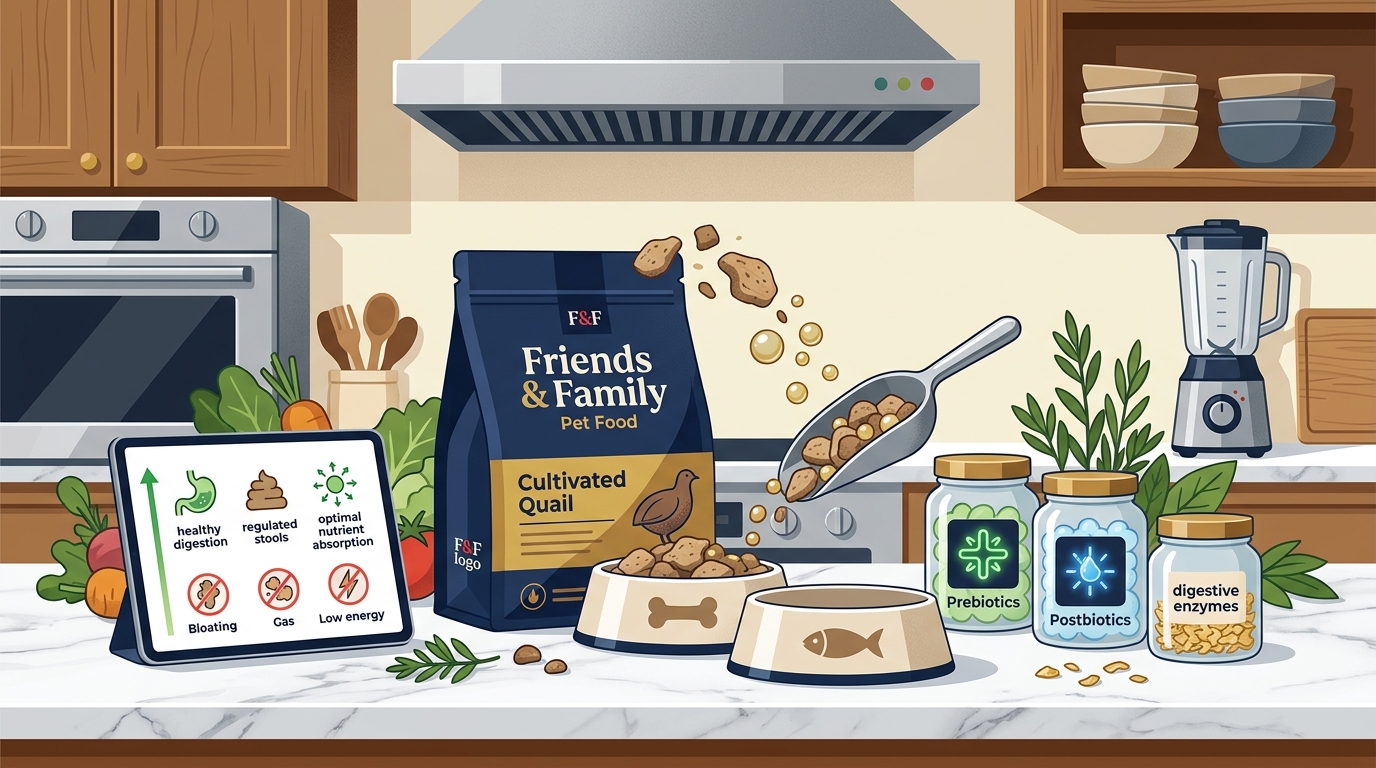
Friends & Family Pet Food's Digestive Balance treats combine cultivated quail meat with a prebiotic yeast blend specifically formulated to support gut health and clear harmful bacteria. This approach targets the gastrointestinal microbiome to promote smoother digestion and better nutrient use.
Why Postbiotics Are the Next Frontier
Postbiotics are bioactive compounds produced when probiotics ferment prebiotic fibers. These compounds include enzymes, peptides, organic acids, and SCFAs that directly support gut and immune function. Unlike probiotics, postbiotics do not require microbial viability, making them more stable and consistent in pet food applications.
Advantages Over Probiotics Alone
A 2025 study on postbiotic supplementation in cats found that postbiotics circumvent the need for gastrointestinal survivability, providing greater stability, consistency, and safety in functional pet food. They work even in compromised gut environments where live probiotics may not survive.
| Feature | Prebiotics | Probiotics | Postbiotics |
|---|---|---|---|
| What they are | Non-digestible fibers | Live beneficial bacteria | Metabolic byproducts of probiotics |
| How they work | Feed good bacteria | Add good bacteria to the gut | Deliver beneficial compounds directly |
| Stability in food | High | Low (heat-sensitive) | Very high |
| Refrigeration needed | No | Often yes | No |
| Works in compromised guts | Partially | Variable | Yes |
Friends & Family uses clinically validated postbiotics in their Skin & Coat Glow and Teeth & Gum Care treat lines. These postbiotics are research-proven to adjust the mouth's microbiome and reduce bacteria that cause bad breath, while also supporting skin health from within.
Protein Quality and Digestibility Matter
Digestibility is the percentage of nutrients your pet actually absorbs from food. Highly processed kibble made with commodity meats and fillers often results in lower digestibility, meaning more waste and less nutrition per serving.
Why Cultivated Meat Is Different
Cultivated meat is real animal protein grown from cells in a controlled, food-grade environment. Friends & Family Pet Food produces human-grade cultivated quail meat that is freeze-dried to lock in nutrition and flavor without the nutrient degradation caused by high-heat extrusion. Their treats deliver upwards of 67% protein with high bioavailability, according to the company's founder.
The freeze-drying process preserves the protein's native structure, making it exceptionally digestible. This matters because better digestibility means fewer digestive issues and more consistent stool quality for your pet.
Practical Steps to Improve Digestion Naturally
1. Transition Foods Gradually
Sudden diet changes are one of the most common causes of digestive upset. When switching foods, mix the new option in gradually over 7 to 10 days, increasing the proportion slowly.
2. Add Prebiotic-Rich Foods or Treats
Incorporate prebiotic fibers through whole foods like pumpkin or through purpose-built functional treats. The Digestive Balance line from Friends & Family is formulated with prebiotics specifically to support the gastrointestinal microbiome.
3. Choose High-Protein, Minimally Processed Foods
Prioritize foods where real meat is the first ingredient and processing is minimal. Freeze-dried formats retain more nutrients than extruded kibble. Browse the full range of functional treats at Friends & Family for options designed around protein quality.
4. Ensure adequate hydration, as water is essential for healthy digestion. Bone broths and meal toppers can encourage fluid intake. 5. Visit your vet if symptoms persist beyond a few days, as chronic digestive issues may require professional diagnosis.
Key Takeaways
- The gut microbiome is the foundation of your pet's digestive health, immunity, and overall well-being.
- Prebiotics feed beneficial gut bacteria, while postbiotics deliver health benefits directly and with greater stability than probiotics alone.
- Protein digestibility is just as important as protein quantity; freeze-dried, minimally processed formats preserve more nutrition.
- Cultivated meat offers a cleaner, more digestible protein source free from antibiotics, hormones, and chlorine.
- Gradual food transitions and prebiotic-rich treats can prevent most common digestive upsets.
- Persistent itching and bad breath can be signs of gut imbalance, not just surface-level issues.
- Clinically validated postbiotics, like those in Friends & Family treats, target root causes of common pet health problems.
Frequently Asked Questions
What is the gut microbiome in pets?
The gut microbiome is the community of trillions of microorganisms, including bacteria, fungi, and viruses, living in your pet's digestive tract. It plays a critical role in digestion, immune function, and nutrient absorption.
What is the difference between prebiotics and postbiotics?
Prebiotics are non-digestible fibers that feed beneficial gut bacteria. Postbiotics are the bioactive byproducts produced when probiotics ferment those fibers. Postbiotics are more stable and do not require live organisms to deliver benefits.
Can I give my pet human probiotics?
While human probiotics are not toxic to pets, they may not provide the same benefits because dogs and cats have different gut microbiomes. Species-specific formulations are recommended by veterinarians, as noted by PetMD.
How long does it take for digestive supplements to work?
Most pet supplement manufacturers report noticeable improvement in digestive health within four weeks. Friends & Family's Digestive Balance treats are designed to promote more consistent stool quality as the microbiome adjusts.
What makes cultivated meat easier to digest?
Cultivated meat is grown in a controlled environment without antibiotics or hormones, resulting in a cleaner protein. When freeze-dried rather than extruded, it retains its native protein structure and natural bioavailability, making it highly digestible for cats and dogs.
Are freeze-dried treats better for digestion than kibble?
Freeze-drying locks in nutrition and flavor at low temperatures, avoiding the nutrient degradation that occurs during high-heat kibble extrusion. This preserves protein integrity and supports better digestibility.
Where can I buy digestive health treats for my pet in Singapore?
Friends & Family Pet Food's Digestive Balance treats are available through select retail stores in Singapore and directly via their online shop. Visit the FAQ page for shipping details.
Support Your Pet's Gut Health Today
Improving your pet's digestion naturally starts with the right ingredients. Explore Friends & Family Pet Food's Digestive Balance treats, formulated with cultivated quail protein and prebiotics to support a healthier gut from the very first bite.