

How to Improve Your Pet's Digestion Naturally
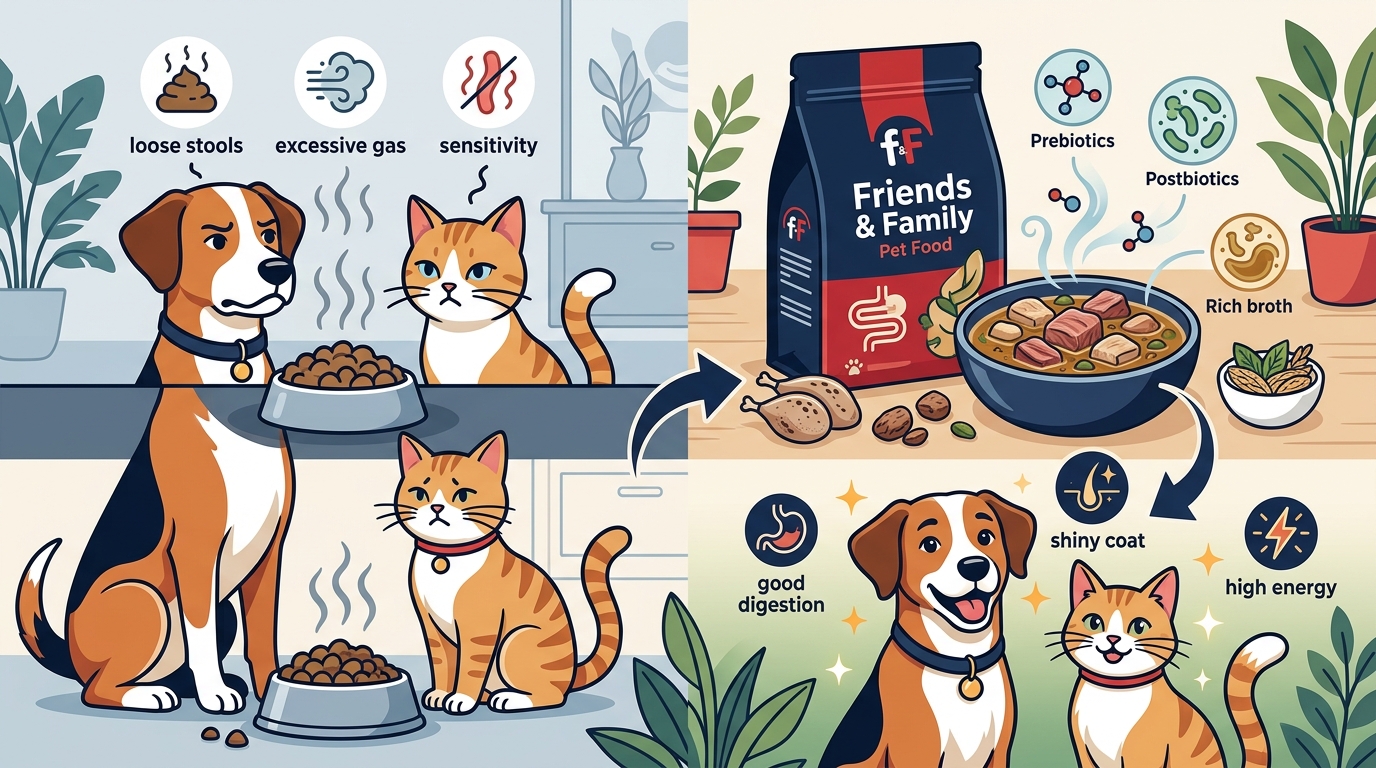
Digestive issues are among the most common reasons pet parents visit the vet. From loose stools and excessive gas to food sensitivities and low energy, poor gut health can quietly undermine your cat or dog's overall wellbeing. The good news? Natural strategies like adding prebiotics, postbiotics, and highly digestible protein can make a dramatic difference. In this guide, we break down the science behind your pet's gut microbiome and share practical, evidence-backed steps you can start today to support healthier digestion for your furry family member.
Understanding Your Pet's Gut Microbiome
The gut microbiome is the community of trillions of bacteria, fungi, and other microorganisms living in your pet's digestive tract. These microbes do far more than break down food. They influence nutrient absorption, immune response, mood, and even skin and coat condition.
According to veterinary nutrition research, about 70% of your pet's immune cells reside in the gut. When this ecosystem falls out of balance, the effects ripple through the entire body. That is why a nutrition-first approach to digestion starts with understanding what your pet's gut bacteria actually need.
Signs Your Pet Has Digestive Problems
Not every digestive issue is obvious. Watch for these common indicators:
- Chronic loose stools or constipation
- Excessive gas or bloating
- Vomiting after meals
- Grass eating
- Dull coat, itchy skin, or excessive shedding
- Low energy or mood changes
Because digestive health influences everything from nutrient absorption and immune function to mood and energy levels, even subtle changes in stool quality or appetite can signal an imbalance worth addressing. If symptoms persist for more than a few days, consult your veterinarian before making dietary changes.
Step 1: Add Prebiotics to Feed Good Bacteria
Prebiotics are non-digestible fibers that nourish the beneficial bacteria already living in your pet's gut. Think of them as fertilizer for a healthy inner garden. Common prebiotic sources include chicory root (rich in inulin and fructooligosaccharides), pumpkin, and nutritional yeast.
Why Prebiotics Matter
Without adequate prebiotic fiber, good bacteria struggle to compete with harmful strains. This can lead to poor digestion, weakened immunity, and increased inflammation. Friends & Family Pet Food includes prebiotic fibers in its Digestive Balance treats specifically to support gut health and clear harmful bacteria in cats and dogs.
Easy Prebiotic-Rich Additions
Pet-safe, prebiotic-rich whole foods you can add in small amounts include pumpkin puree (plain, not pie filling), blueberries, and apples without seeds. For a more consistent approach, look for treats or supplements that contain validated prebiotic blends formulated for pets.
Step 2: Introduce Postbiotics for Gentle, Stable Support
Postbiotics are the beneficial byproducts produced when probiotics ferment prebiotics. They include short-chain fatty acids, enzymes, peptides, and other metabolites that directly support gut lining integrity and immune balance. Unlike probiotics, postbiotics are non-living, which makes them shelf-stable and gentler on sensitive stomachs.
The Postbiotic Advantage
Research from ADM and the University of Illinois found that postbiotics can be as effective as live probiotics in supporting digestive health and beneficial fecal short-chain fatty acid profiles in adult dogs. Because they do not require live organisms to function, postbiotics avoid the bloating and gas that some pets experience with traditional probiotic supplements.
Friends & Family Pet Food uses clinically validated postbiotics across its Teeth & Gum Care and Skin & Coat Glow product lines, targeting the oral and skin microbiomes respectively. Their Kampong Select freeze-dried treats also incorporate biotics to support digestion alongside high protein content.
Step 3: Choose Highly Digestible Protein
Protein quality matters as much as quantity when it comes to digestion. Highly digestible protein is protein that your pet's body can efficiently break down and absorb, reducing waste and digestive strain. Conventional kibble processed at high temperatures can degrade amino acids and reduce bioavailability.
Why Freeze-Dried Formats Help
Freeze-drying locks in nutrition and flavor while avoiding the nutrient degradation that occurs during high-heat extrusion. Friends & Family's cultivated quail treats reach upwards of 67% protein with high bioavailability, using human-grade cultivated meat as the first ingredient. The company's founder, Joshua Errett, has noted that cultivated meat can be optimized to improve digestibility and nutrient absorption in ways conventional farming cannot match.
Protein and the Gut Connection
A diet with sufficient high-quality, bioavailable protein supports the gut lining, fuels beneficial microbial activity, and reduces the fermentation of undigested food that causes gas and loose stools. When combined with prebiotics and postbiotics, quality protein creates the foundation of a truly gut-friendly diet.
Prebiotics vs. Probiotics vs. Postbiotics: A Comparison
| Feature | Prebiotics | Probiotics | Postbiotics |
|---|---|---|---|
| What they are | Non-digestible fibers that feed good bacteria | Live beneficial microorganisms | Beneficial compounds produced by probiotic fermentation |
| Stability | Highly stable | Sensitive to heat, moisture, and processing | Highly stable; withstand heat and storage |
| Common sources | Chicory root, pumpkin, FOS | Yogurt, kefir, supplements | Fermentation byproducts, specialized supplements |
| Risk of side effects | Low (excess may cause gas) | Moderate (may cause bloating in sensitive pets) | Very low (non-living, gentle on sensitive systems) |
| Key benefits | Feeds good bacteria, reduces pathogens | Adds good bacteria to the gut | Strengthens gut lining, boosts immunity, aids nutrient absorption |
| Best for | Daily maintenance | Restoring flora after antibiotics | Sensitive stomachs, long-term daily use |
An ideal approach combines all three. Friends & Family's FAQ page explains how their product lines layer these functional ingredients for comprehensive gut and immune support.
Key Takeaways
- Your pet's gut microbiome controls digestion, immunity, skin health, and mood.
- Prebiotics feed good bacteria; look for chicory root, FOS, or nutritional yeast in treats.
- Postbiotics are stable, gentle, and clinically shown to support digestive and immune health.
- High-quality, bioavailable protein reduces digestive strain and supports the gut lining.
- Freeze-dried formats preserve more nutrients than high-heat processed kibble.
- Combining prebiotics and postbiotics with digestible protein creates the strongest foundation for natural digestive health.
- Always consult your veterinarian before making significant dietary changes.
Frequently Asked Questions
What is the fastest way to improve my pet's digestion naturally?
Start by adding a prebiotic-rich food like plain pumpkin or a validated prebiotic supplement to your pet's meals. You should see stool improvements within one to two weeks. For faster, more consistent results, look for treats that combine prebiotics with postbiotics.
Are postbiotics safe for cats and dogs?
Yes. Postbiotics are non-living compounds, which makes them very safe and gentle. They do not introduce foreign bacteria and are well-tolerated even by pets with sensitive stomachs. Clinically studied postbiotics have been validated in both dogs and cats.
What is the difference between prebiotics and postbiotics?
Prebiotics are fibers that feed beneficial gut bacteria. Postbiotics are the beneficial metabolic byproducts created when probiotics digest those fibers. Both support gut health, but postbiotics deliver benefits directly without needing live organisms.
Can changing protein source help my pet's digestion?
Absolutely. Switching to a more digestible, high-quality protein source can reduce gas, improve stool quality, and boost nutrient absorption. Novel proteins like cultivated quail can be especially helpful for pets with sensitivities to common proteins like chicken or beef.
How do cultivated meat treats support digestion?
Cultivated meat is produced in controlled conditions without antibiotics or hormones, resulting in a cleaner protein. Friends & Family's cultivated quail treats are formulated with up to 70% cultivated meat content alongside prebiotics and postbiotics, creating a functional treat designed specifically for digestive balance.
How long does it take to see digestive improvements?
Most pet parents notice firmer stools and reduced gas within two to four weeks of consistent dietary changes. Coat and skin improvements from better nutrient absorption typically appear within four to six weeks.
Should I give my pet probiotics or postbiotics?
Both can help, but for pets with sensitive stomachs, postbiotics are often the better starting point. They provide many of the same benefits as probiotics without the risk of gas or bloating from live cultures. You can also use both together as part of a synbiotic approach.
Give Your Pet's Gut the Support It Deserves
Ready to try a science-backed approach to natural digestive health? Explore Friends & Family Pet Food's full range of cultivated quail treats with clinically validated prebiotics and postbiotics. Available now in Singapore with delivery across the region.