
Digestive troubles are one of the most common reasons pet parents visit the vet. From loose stools and gas to poor nutrient absorption, gut issues can quietly undermine your cat or dog's overall health. The good news? Many digestive problems respond well to natural dietary changes. In this guide, we walk through proven, practical steps you can take to support your pet's digestion, including the emerging science behind postbiotics and the role that high-quality protein plays in gut health. Whether you have a sensitive-stomach kitten or an older dog with occasional tummy troubles, these strategies can help.
Why Gut Health Matters for Cats and Dogs
Your pet's gastrointestinal tract does far more than break down food. It houses roughly 70% of the immune system, regulates inflammation, and even influences mood through the gut-brain axis. A balanced gut microbiome is the foundation that supports all of these functions.
When the microbiome falls out of balance, a state called dysbiosis, the consequences ripple outward. Research published in Frontiers in Microbiology (2025) links dysbiosis in cats to digestive disorders, inflammatory diseases, and metabolic disturbances. In short, a healthy gut equals a healthier pet.
Signs of Poor Digestion to Watch For
Pets cannot tell you their stomach hurts, so you need to read the signals. Common signs include chronic loose stools, excessive gas, vomiting after meals, bad breath, dull coat, and unexplained weight loss. If symptoms persist for more than a day or two, consult your veterinarian.
Occasional digestive upset is normal, especially during food transitions or stressful events like travel. However, recurring issues point to a deeper imbalance that dietary adjustments can often address.
Prebiotics, Probiotics, and Postbiotics Explained
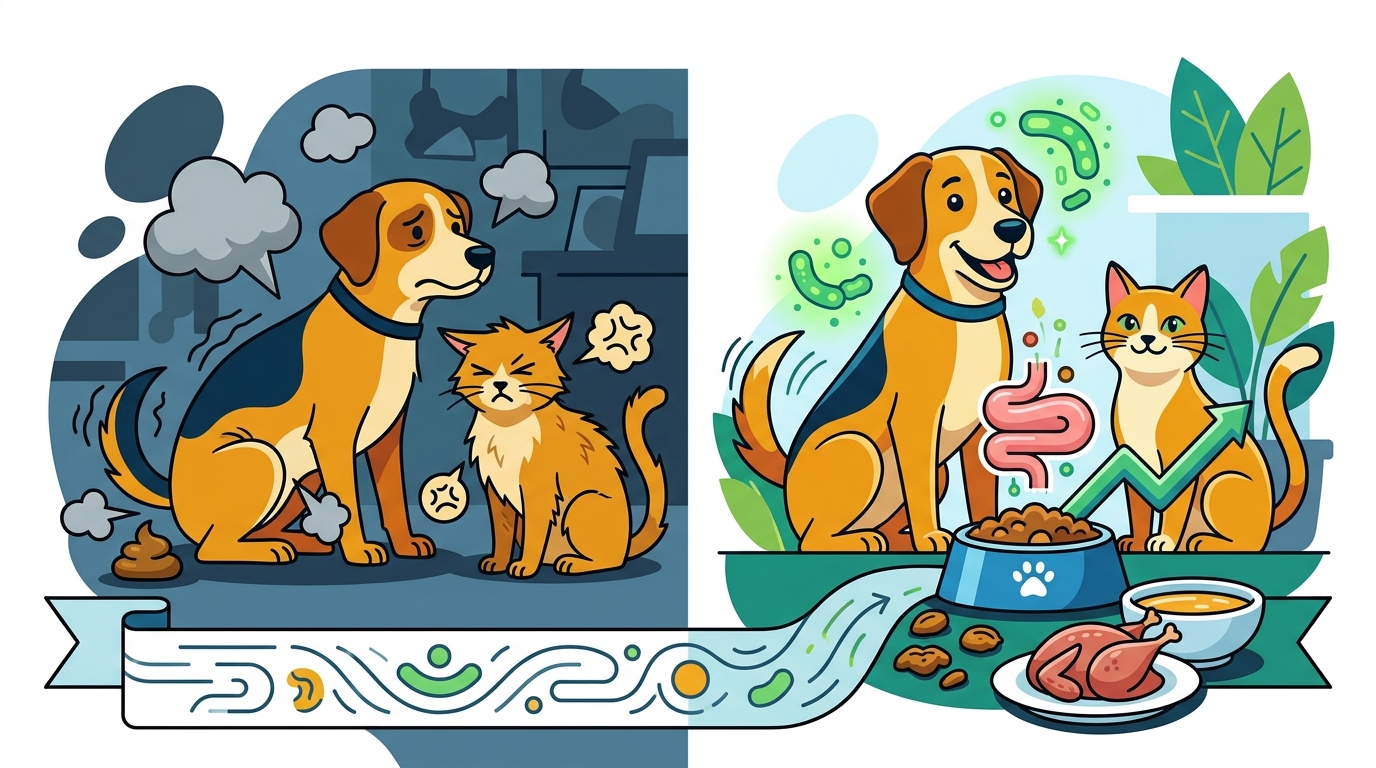
Understanding the three "biotics" is the first step toward improving your pet's digestion naturally.
Prebiotics
Prebiotics are non-digestible fibers that nourish the beneficial bacteria already living in your pet's gut. Common sources include inulin, fructooligosaccharides (FOS), pumpkin, and chicory root. They set the stage for a thriving microbiome.
Probiotics
Probiotics are live beneficial microorganisms introduced into the gut through food or supplements. They help restore microbial balance, but they come with caveats. Stomach acids can destroy them before they reach the intestine, and in pets with sensitive stomachs, live bacteria may cause gas or bloating.
Postbiotics
Postbiotics are the metabolic byproducts produced when probiotics ferment prebiotics. They include short-chain fatty acids, enzymes, peptides, and other metabolites. Unlike probiotics, postbiotics are non-living compounds, making them shelf-stable and gentler on sensitive digestive systems.
| Feature | Prebiotics | Probiotics | Postbiotics |
|---|---|---|---|
| What they are | Non-digestible fibers | Live beneficial bacteria | Metabolic byproducts of fermentation |
| Primary role | Feed good bacteria | Add good bacteria | Deliver ready-made beneficial compounds |
| Shelf stability | High | Low (heat-sensitive) | High |
| Sensitivity risk | Low | Moderate (gas, bloating) | Very low |
| Found in | Pumpkin, chicory root, FOS | Yogurt, kefir, supplements | Fermented ingredients, advanced pet foods |
The Postbiotic Advantage for Pets
Postbiotics are quickly becoming the most exciting area in pet nutrition science. A 2025 systematic review and meta-analysis published on PubMed Central found that supplementing dogs with postbiotics provides not only intestinal benefits but also systemic advantages, as many compounds are transported via the bloodstream.
Peer-reviewed studies show postbiotics can improve stool quality, strengthen the gut barrier, enhance nutrient absorption, and support immune function. A 2026 randomized, double-blind study demonstrated that a novel postbiotic improved stool consistency in dogs with chronic loose stools after just 28 days.
At Friends & Family Pet Food, our Kampong Select freeze-dried cultivated snacks are formulated with prebiotics and probiotics baked into every treat, supporting your pet's natural postbiotic production from the inside out.
Why Protein Quality Impacts Digestibility
Not all protein is created equal when it comes to digestion. Highly digestible protein means your pet absorbs more nutrients and produces less waste. Conventional factory-farmed poultry can carry antibiotics, hormones, and additives that may irritate sensitive guts.
Cultivated meat is meat grown from animal cells in a controlled environment. Friends & Family's cultivated poultry is optimized for higher levels of taurine and Omega-3s while improving digestibility and nutrient absorption. Our treats contain 99% human-grade cultivated meat, free from antibiotics, hormones, and chlorine.
This approach draws inspiration from heritage Kampung birds of Southeast Asia, whose lean, nutrient-dense meat is rich in iron, zinc, vitamin B12, and selenium. By cultivating meat with this nutritional profile, we deliver a cleaner, more digestible protein for cats and dogs.
6 Natural Steps to Better Digestion
1. Transition Foods Gradually
Abrupt diet changes are a leading cause of digestive upset. Mix the new food with the old over 7 to 10 days, gradually increasing the ratio. This gives gut bacteria time to adapt.
2. Add Prebiotic-Rich Foods
Small amounts of plain canned pumpkin (not pie filling) or steamed sweet potato provide soluble fiber that feeds beneficial bacteria. Start with a teaspoon for small pets and a tablespoon for larger dogs.
3. Choose Treats with Built-In Biotics
Rather than adding separate supplements, look for treats that already contain prebiotics, probiotics, or postbiotics. Our Kampong Select cultivated snacks include a sprinkling of high-value biotics designed to support digestion and immunity in every bite.
4. Prioritize High-Quality, Digestible Protein
Select foods where the primary ingredient is a named, high-quality protein source. Cultivated meat offers a uniquely clean option because it is produced without the contaminants found in conventional farming.
5. Keep Fresh Water Available
Hydration is essential for healthy digestion. Bone broths can also encourage water intake while providing amino acids that support gut lining repair. Learn more about our broth options on the Friends & Family homepage.
6. Consult Your Veterinarian
Persistent digestive issues deserve professional attention. Your vet can rule out underlying conditions and recommend targeted interventions. Check our FAQ page for common questions about pet nutrition and cultivated meat.
Key Takeaways
- Gut health affects roughly 70% of your pet's immune system, making digestion central to overall wellness.
- Prebiotics feed good bacteria; probiotics add good bacteria; postbiotics deliver ready-made beneficial compounds directly.
- Postbiotics are non-living, shelf-stable, and gentler on sensitive stomachs than live probiotics.
- Clinical studies show postbiotics can improve stool quality, strengthen the gut barrier, and support immune function in dogs and cats.
- Protein quality matters: highly digestible, additive-free protein like cultivated meat reduces gut irritation.
- Gradual food transitions, prebiotic-rich additions, and adequate hydration are simple, effective natural strategies.
- Always consult your veterinarian for persistent or severe digestive symptoms.
Frequently Asked Questions
What is the difference between probiotics and postbiotics for pets?
Probiotics are live beneficial bacteria that colonize the gut. Postbiotics are the non-living metabolic byproducts created when probiotics ferment prebiotics. Postbiotics include short-chain fatty acids, enzymes, and peptides that deliver digestive and immune benefits without the risk of introducing foreign live organisms.
Can I give my cat pumpkin for digestion?
Yes. Plain canned pumpkin (not spiced pie filling) is a safe source of soluble fiber for most cats. Start with half a teaspoon per day and monitor stool quality. The fiber acts as a prebiotic, feeding beneficial gut bacteria.
How long does it take for dietary changes to improve my pet's digestion?
Most pets show noticeable improvement within 7 to 14 days of consistent dietary changes. Clinical studies on postbiotic supplementation have documented measurable stool quality improvements in as few as 28 days.
What is cultivated meat in pet food?
Cultivated meat is real animal protein grown from cells in a controlled environment. It offers the same nutritional profile as conventional meat but can be optimized for higher nutrient density and is produced without antibiotics, hormones, or environmental contaminants.
Are postbiotics safe for puppies and kittens?
Postbiotics are generally considered safe because they are non-living compounds. However, always consult your veterinarian before introducing any new supplement or treat to young animals.
Why does my dog have loose stools after switching food?
Abrupt diet changes disrupt the established gut microbiome, leading to temporary loose stools. Transition gradually over 7 to 10 days to give intestinal bacteria time to adjust to new nutrient profiles.
How does Friends & Family Pet Food support digestion?
Friends & Family's Kampong Select freeze-dried treats contain 99% human-grade cultivated meat plus prebiotics and probiotics. This combination supports natural postbiotic production, promoting better digestion, nutrient absorption, and immune function.
Give Your Pet the Digestive Support They Deserve
Ready to upgrade your pet's treats with cleaner protein and built-in gut health support? Explore Kampong Select cultivated snacks from Friends & Family Pet Food and see the difference that better ingredients make.