

Digestive issues are among the most common reasons pet owners visit the vet, yet many cases of soft stools, gas, and food sensitivity can be managed through simple dietary changes. From choosing highly digestible proteins to adding prebiotics and postbiotics, natural strategies can restore gut balance without relying on medication. This guide walks you through proven, science-backed steps to support your cat's or dog's digestive health, including the emerging role of cultivated meat and functional ingredients that are changing the way we feed our pets.
Recognise the Signs of Poor Digestion
Before you change anything, know what to look for. Common digestive warning signs in dogs and cats include intermittent soft stools, excessive flatulence, vomiting after meals, and decreased appetite. Occasional stomach upset is normal, but persistent symptoms lasting more than a few days warrant a closer look at diet.
A healthy gut microbiome is central to your pet's overall wellbeing. Gastrointestinal disorders are a frequent concern for pet owners and veterinarians, and dietary management is often essential to correct imbalances in the gut flora. Tracking stool consistency over a week can help you and your vet pinpoint whether the issue is diet-related or something more serious.
Start With a Highly Digestible Protein
Protein quality is the single biggest lever you can pull for digestive health. Low-quality rendered meals and by-products are harder for pets to break down, leaving undigested material to ferment in the colon and cause gas, odour, and loose stools.
Why Cultivated Meat Stands Out
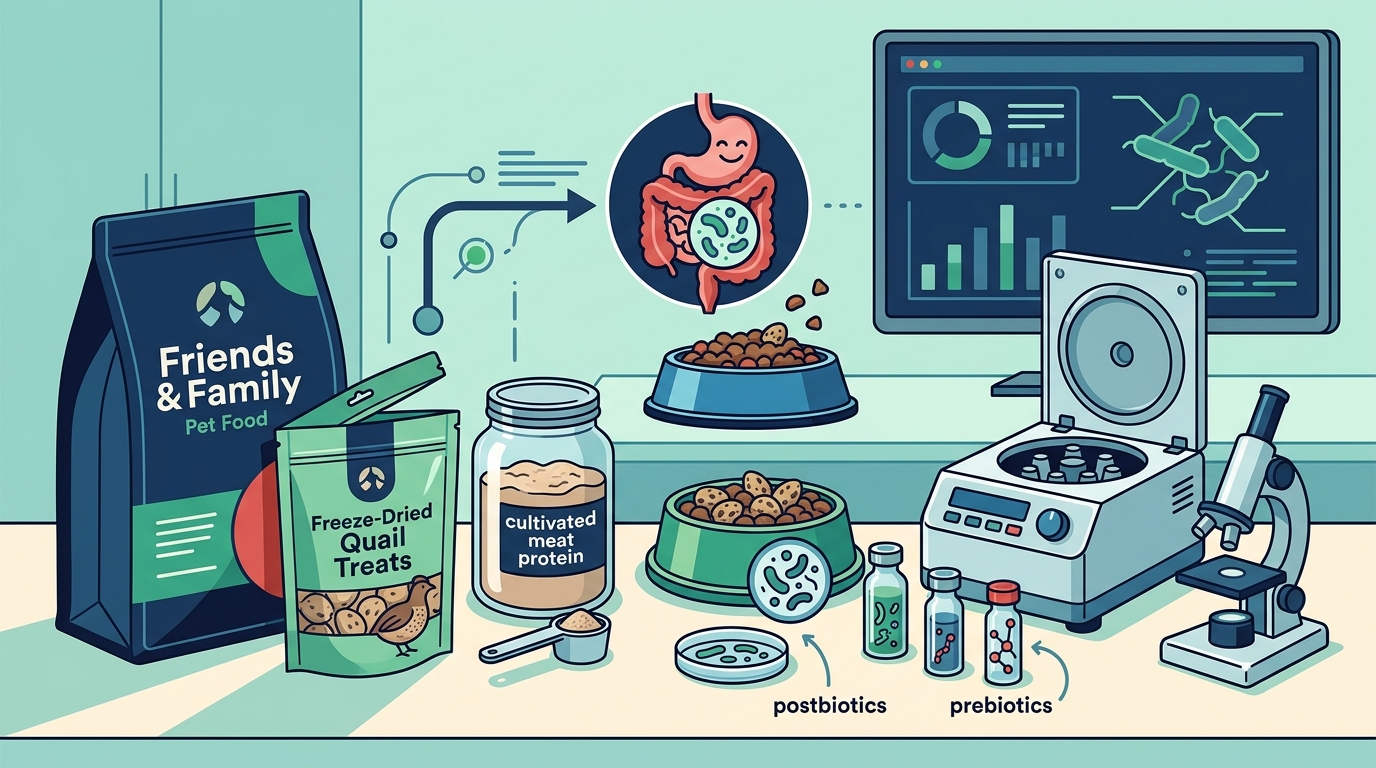
Cultivated meat is real animal protein grown from cells in a bioreactor, without factory farming. According to Friends & Family Pet Food founder Joshua Errett, their cultivated quail meat is "protein-forward, naturally gamey, and highly digestible." Because the protein is made fresh and used without heavy processing, it works with cat and dog biology rather than against it. Learn more about how Friends & Family develops its cultivated meat.
Nutrient Optimisation Built In
Unlike conventional farming, cultivated meat can be optimised at the cellular level. Friends & Family reports that this means higher levels of nutrients like taurine and Omega-3s, plus improved digestibility and nutrient absorption. For pets with sensitive stomachs, a cleaner, more bioavailable protein source can make a noticeable difference within days.
Add Prebiotic Fibre to the Diet
Prebiotics are non-digestible carbohydrates that serve as food for the beneficial bacteria already living in your pet's gut. Think of them as fertiliser for a healthy microbiome. Common prebiotic sources include inulin, chicory root, and yeast-based fibres.
Friends & Family's Digestive Balance line combines cultivated quail meat with a prebiotic yeast blend specifically designed to support gut health and clear harmful bacteria. A 2026 study published in Frontiers in Veterinary Science found that 28 days of prebiotic-postbiotic supplementation resulted in significant gastrointestinal improvements in roughly 70 out of 114 cats and dogs studied, with the proportion of animals having moist or liquid stools significantly reduced.
Introduce Postbiotics for Gut Stability
Postbiotics are bioactive compounds produced when beneficial bacteria ferment prebiotic fibres in the gut, including short-chain fatty acids, peptides, and organic acids. Unlike probiotics, which must survive stomach acid to be effective, postbiotics are stable, require no refrigeration, and work even in compromised gut environments.
How Postbiotics Help Pets
In dogs, postbiotics help strengthen the intestinal barrier, regulate immune responses, reduce inflammation, and improve nutrient absorption. A 2024 systematic review in PMC confirmed that postbiotics can modulate the composition and diversity of the gut microbiota, which in turn impacts overall host health. Research in cats similarly shows postbiotics support gut barrier integrity and immune balance.
Clinically Validated Options
Friends & Family uses clinically validated postbiotics across its Teeth & Gum Care and Skin & Coat Glow product lines. As Errett notes, "We've added clinically validated prebiotics and postbiotics that target real pet health problems." You can explore these functional treat ranges on the Friends & Family homepage.
Prebiotics vs Probiotics vs Postbiotics
Understanding the difference between these three "biotics" helps you choose the right supplement strategy for your pet.
| Feature | Prebiotics | Probiotics | Postbiotics |
|---|---|---|---|
| What it is | Non-digestible fibres | Live beneficial bacteria | Bioactive metabolic by-products |
| Function | Feeds good gut bacteria | Adds good bacteria directly | Delivers end-benefit compounds |
| Stability | Shelf-stable | Requires careful storage; may not survive digestion | Highly stable; no viability concerns |
| Best for | Ongoing microbiome support | Restoring bacteria after antibiotics | Immune and gut-barrier support |
| Common sources | Inulin, chicory root, yeast fibre | Lactobacillus, Bifidobacterium | SCFAs, organic acids, peptides |
Many veterinary nutritionists now recommend combining prebiotics and postbiotics in a synbiotic approach for the broadest digestive benefit.
Build a Consistent Feeding Routine
Even the best ingredients will not help if feeding habits are chaotic. Sudden food switches are a leading cause of digestive upset. When introducing new proteins or supplements, transition gradually over seven to ten days, mixing increasing amounts of the new food with the old.
Portion Control and Meal Timing
Feed at the same times each day. Consistent meal timing helps regulate gastric acid production and keeps the gut's bacterial cycles predictable. Use treat toppers, like Friends & Family's freeze-dried cultivated quail treats, as functional additions rather than calorie-dense extras.
Hydration Matters
Adequate water intake is essential for fibre to do its job. Bone broths and meat broths can encourage hydration while delivering additional peptides and electrolytes. Friends & Family's broth range is designed to be a good source of iron, electrolytes, antioxidants, vitamins, and minerals.
Key Takeaways
- Persistent soft stools, gas, or vomiting signal a gut imbalance worth addressing through diet before medication.
- Highly digestible proteins, such as cultivated quail meat, reduce the fermentable residue that causes gas and loose stools.
- Prebiotics feed existing good bacteria; postbiotics deliver stable, ready-made gut-health compounds.
- A 2026 Frontiers study showed prebiotic-postbiotic blends significantly improved stool quality in cats and dogs within 28 days.
- Postbiotics are more stable than probiotics and work even in compromised gut environments.
- Gradual food transitions over 7 to 10 days prevent digestive shock.
- Consistent meal timing and hydration are simple but powerful digestive supports.
Frequently Asked Questions
What is the fastest way to improve my pet's digestion?
Switching to a highly digestible, single-source protein and adding a prebiotic supplement are the two most impactful changes. Many pet owners see stool improvements within one to two weeks.
What are postbiotics for pets?
Postbiotics are bioactive compounds, including short-chain fatty acids and peptides, produced when gut bacteria ferment prebiotic fibres. They support gut-barrier integrity, immune function, and nutrient absorption without requiring live bacteria to survive digestion.
Are prebiotics safe for cats and dogs?
Yes. Prebiotic fibres like inulin and yeast-based blends are widely studied and considered safe. Friends & Family's prebiotic blend has been shown to rehabilitate the microbiome of cats and dogs when included in daily treats.
How is cultivated meat different from plant-based pet food?
Cultivated meat is real animal protein grown from animal cells. It is nutritionally identical to meat from a slaughtered animal, but produced without factory farming. Plant-based pet food replaces animal protein entirely, which can be problematic for obligate carnivores like cats.
Can I give my pet probiotics and postbiotics at the same time?
Yes. Combining prebiotics, probiotics, and postbiotics in a synbiotic formula is an emerging best practice in veterinary nutrition. Each targets a different part of the digestive ecosystem.
How long does it take for digestive supplements to work?
Most clinical studies show measurable improvements in stool quality and digestive signs within 28 days of consistent supplementation, though some pet owners report changes sooner.
Is Friends & Family Pet Food available outside Singapore?
Friends & Family is currently sold in Singapore with plans to expand across Asia and into Australia. Check the latest news for availability updates.
Do I need a vet's approval before changing my pet's diet?
It is always wise to consult your veterinarian before making significant dietary changes, especially if your pet has a diagnosed gastrointestinal condition or is on medication.
Give Your Pet's Gut a Fresh Start
Ready to see the difference a highly digestible, prebiotic-rich diet can make? Explore Friends & Family's Digestive Balance treats, made with cultivated quail meat and a clinically backed prebiotic blend designed to support gut health from the very first bite.