
How to Improve Your Pet's Digestion Naturally: 7 Proven Tips
Digestive issues are among the most common reasons pet parents visit the vet. From loose stools and gas to food sensitivities and poor nutrient absorption, gut troubles can quietly undermine your cat's or dog's overall health. The good news is that many digestive problems respond well to natural dietary adjustments. In this guide, we walk through seven evidence-based strategies you can start today, including the role of prebiotics, postbiotics, and highly digestible proteins like cultivated quail meat from Friends & Family Pet Food.
1. Understand Your Pet's Gut Microbiome
The gut microbiome is the community of trillions of microorganisms living in your pet's digestive tract. These bacteria, yeasts, and other microbes influence digestion, immune regulation, and even skin health. A balanced microbiome helps extract nutrients efficiently, while an imbalanced one, known as dysbiosis, has been linked to digestive disorders, inflammatory diseases, and metabolic disturbances.
Dysbiosis is a disruption in the normal composition of gut bacteria that can trigger chronic diarrhoea, flatulence, and even itchy skin in pets. Recognising the signs early allows you to intervene with diet before problems escalate.
2. Choose Highly Digestible Protein Sources
Protein quality matters more than quantity when it comes to digestion. Low-quality by-products and heavily rendered meals can stress your pet's gastrointestinal system. Instead, look for protein sources with high bioavailability, meaning the body can absorb and use the amino acids efficiently.
Why Cultivated Quail Meat Stands Out
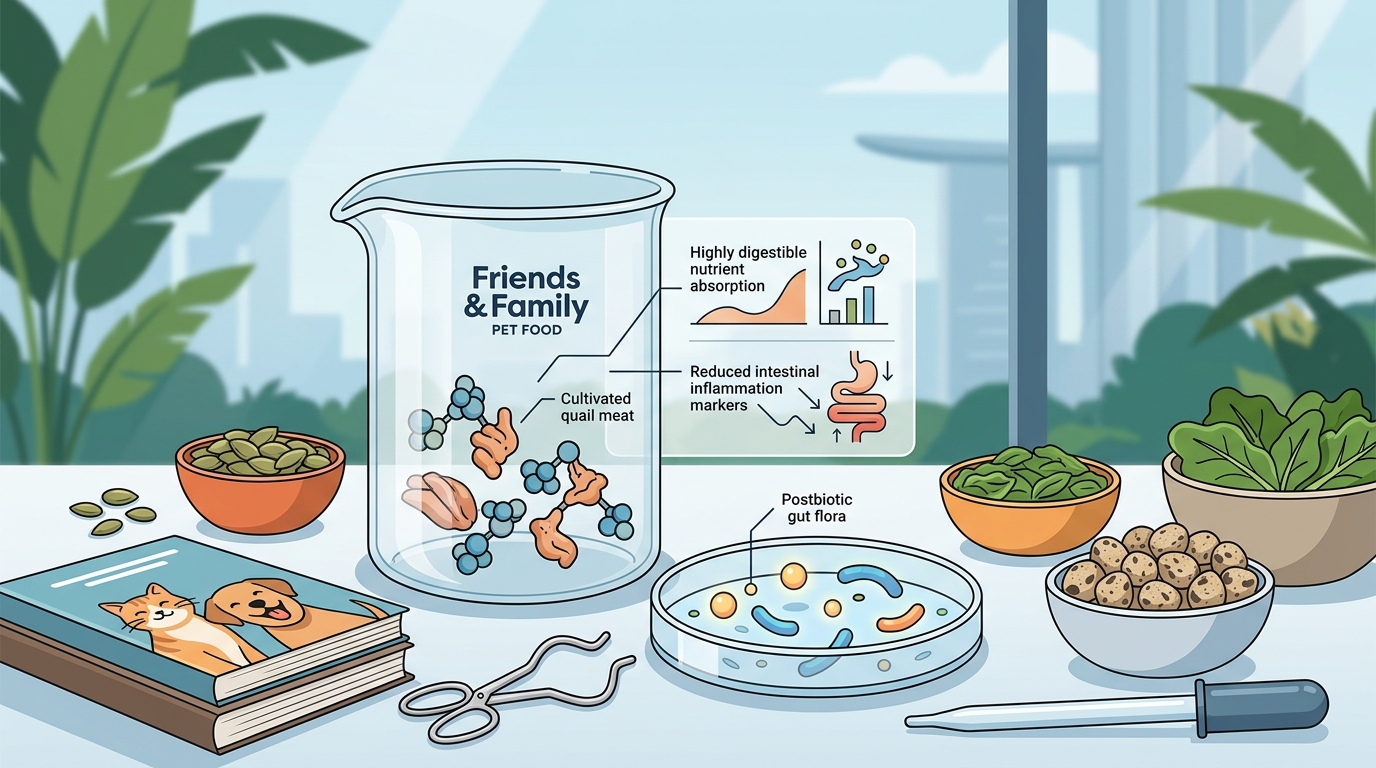
Friends & Family Pet Food produces freeze-dried cultivated quail treats that hit upwards of 67% protein with high bioavailability. Unlike conventional pet treats made from processing leftovers, cultivated meat is grown from animal cells in controlled conditions, yielding a lean, nutrient-dense protein rich in taurine and Omega-3s. This protein-forward approach supports better digestibility and nutrient absorption for both cats and dogs.
3. Add Prebiotic Fibre to Their Diet
A prebiotic is a type of dietary fibre that feeds the beneficial bacteria already present in your pet's gut. Common prebiotic ingredients include inulin, fructo-oligosaccharides (FOS), and specialty yeast blends. By nourishing good bacteria, prebiotics help crowd out harmful microbes and improve stool consistency.
Friends & Family's Digestive Balance line combines cultivated meat with a prebiotic yeast blend specifically formulated to support gut health and clear harmful bacteria. Their unique blend of prebiotic fibres has been shown to help rehabilitate the microbiome of cats and dogs.
4. Explore Postbiotics for Gut Stability
A postbiotic is a beneficial compound produced when probiotics ferment prebiotics, delivering health benefits directly without requiring live bacteria to survive the journey through the gut. Research published in Frontiers in Microbiology (2025) found that long-term dietary inclusion of postbiotics in pet nutrition was associated with improved dermatological conditions and enhanced immunological resilience.
Postbiotics in Practice
Unlike live probiotics, postbiotics are shelf-stable and heat-resistant, making them ideal for freeze-dried treat formats. A 2026 study on canine stool consistency confirmed that postbiotic supplementation can improve stool quality while reshaping the gut microbiome in dogs prone to loose stools. Friends & Family uses clinically validated postbiotics across their Skin & Coat Glow and Teeth & Gum Care lines, making them the first pet company in Singapore with these ingredients.
5. Transition Foods Gradually
One of the most common triggers of digestive upset is sudden dietary change. When switching your pet's food, replace roughly 25% of the old diet every two to three days over a 7 to 10 day period. This gives the gut microbiome time to adapt to new ingredients and fibre profiles.
Research on dietary transitions in dogs showed that animals receiving postbiotic supplementation demonstrated smoother adaptation and more stable faecal consistency during food changes compared to control groups.
6. Prioritise Hydration With Broths and Toppers
Adequate hydration is essential for healthy digestion. Water helps move food through the GI tract, supports nutrient absorption in the small intestine, and assists the large intestine in reabsorbing electrolytes. Cats in particular are notorious for under-drinking.
Bone broths and meal toppers are a practical way to add moisture to your pet's diet while delivering extra nutrition. Friends & Family Pet Food offers cultivated meat broths designed as meal toppers that provide iron, electrolytes, antioxidants, and bioavailable peptides. Learn more on their About Us page.
7. Schedule Regular Vet Check-Ups
Natural strategies work best alongside professional guidance. Chronic digestive symptoms like persistent vomiting, bloody stool, or significant weight loss warrant a veterinary examination. Your vet can rule out conditions such as pancreatitis, intestinal parasites, or inflammatory bowel disease that require targeted treatment beyond dietary changes.
A faecal test during routine check-ups can detect parasites early, and your vet can recommend specific prebiotic or postbiotic supplements tailored to your pet's needs.
Prebiotics vs Probiotics vs Postbiotics: A Quick Comparison
| Feature | Prebiotics | Probiotics | Postbiotics |
|---|---|---|---|
| What it is | Dietary fibre that feeds good bacteria | Live beneficial bacteria | Metabolites from probiotic fermentation |
| Requires refrigeration? | No | Often yes | No |
| Survives heat processing? | Generally yes | Often compromised | Yes |
| Primary benefit | Nourishes existing gut flora | Adds beneficial organisms | Strengthens gut barrier and immunity |
| Found in F&F products? | Yes (Digestive Balance) | Yes (select treats) | Yes (Skin & Coat Glow, Teeth & Gum Care) |
Key Takeaways
- Your pet's gut microbiome directly influences digestion, immunity, and skin health.
- High-bioavailability proteins like cultivated quail meat are easier on the digestive system than heavily processed by-products.
- Prebiotic fibres feed beneficial gut bacteria and improve stool quality.
- Postbiotics are shelf-stable compounds clinically shown to strengthen gut barrier integrity and support immune function.
- Always transition foods gradually over 7 to 10 days to avoid digestive upset.
- Broths and moisture-rich toppers help cats and dogs stay hydrated for smoother digestion.
- Pair natural strategies with regular vet visits for the best outcomes.
Frequently Asked Questions
What are the signs of poor digestion in pets?
Common signs include loose or inconsistent stools, excessive gas, vomiting, loss of appetite, and a dull coat. If symptoms persist for more than 48 hours, consult your veterinarian.
What is a postbiotic and how does it help my pet?
A postbiotic is a beneficial metabolite produced during probiotic fermentation. It delivers gut-supporting compounds directly, without requiring live bacteria to survive processing. Studies show postbiotics can strengthen the intestinal barrier and improve stool consistency in dogs.
Are prebiotics safe for cats?
Yes. Prebiotic fibres like those in the Friends & Family Digestive Balance line are formulated for both cats and dogs. They work by feeding beneficial bacteria already present in the gut, supporting a balanced microbiome.
How long does it take to see digestive improvements?
Many pet parents notice firmer stools within one to two weeks of dietary changes. Broader improvements in coat quality and energy may take four to eight weeks of consistent feeding.
Can cultivated meat improve my pet's digestion?
Cultivated meat is grown from animal cells, producing a clean, highly digestible protein without the contaminants sometimes found in conventional pet food. Friends & Family's cultivated quail meat is protein-forward and naturally rich in amino acids that support digestive health.
Should I give my pet probiotics or postbiotics?
Both can be beneficial. Probiotics introduce live beneficial bacteria, while postbiotics deliver ready-made gut-supporting compounds that are more stable in treat formats. For freeze-dried products, postbiotics tend to retain their efficacy better than live cultures.
Is it okay to add broth to my pet's dry food?
Yes. Adding a nutrient-rich broth is an excellent way to boost hydration and palatability. Look for broths free from onion, garlic, and excess sodium. Friends & Family offers cultivated meat broths designed as safe, nutritious meal toppers.
How do I know if my pet has a food sensitivity?
Food sensitivities often present as chronic diarrhoea, itchy skin, or ear infections. An elimination diet supervised by your vet is the gold standard for diagnosis. Switching to a novel protein like quail can also help identify triggers.
Ready to Support Your Pet's Gut Health?
Explore the full range of cultivated meat treats and broths from Friends & Family Pet Food, including the Digestive Balance and Skin & Coat Glow lines with clinically validated prebiotics and postbiotics. Shop now at friendsandfamily.pet and give your pet the nutrition they deserve.