

Digestive issues are among the most common reasons pet parents visit the vet. From loose stools and bloating to poor nutrient absorption, an unhappy gut can affect your cat or dog's energy, coat, immunity, and overall quality of life. The good news is that natural, diet-driven strategies can make a real difference. In this guide, we walk you through practical steps to support your pet's digestive health, explain the science behind prebiotics, probiotics, and postbiotics, and show you how next-generation ingredients like cultivated meat are changing the game.
Why Digestion Matters More Than You Think
Your pet's gastrointestinal tract does far more than break down food. The gut microbiome plays a vital role in digestion, immune regulation, and metabolic homeostasis, according to a 2025 study in Frontiers in Microbiology. When that microbial balance is disrupted, a state called dysbiosis, it can lead to inflammatory diseases, nutrient malabsorption, and skin problems.
Dysbiosis is a disruption in the balance of beneficial and harmful microorganisms in the gut. It can be triggered by stress, antibiotics, low-quality diets, or sudden food changes. Recognising the connection between gut health and whole-body wellness is the first step toward meaningful improvement.
Signs of Poor Digestion in Dogs and Cats
Not all digestive trouble shows up as vomiting or diarrhoea. Subtler signs include excessive gas, inconsistent stool quality, bad breath, a dull coat, low energy, or frequent scratching. If your pet's skin or coat seems off, the gut may be partly to blame, because the gut-skin axis connects internal microbial health to external appearance.
When to See a Vet
Persistent symptoms lasting more than 48 hours, blood in stool, sudden weight loss, or refusal to eat warrant an immediate vet visit. Natural strategies work best as proactive, everyday support rather than a substitute for veterinary care.
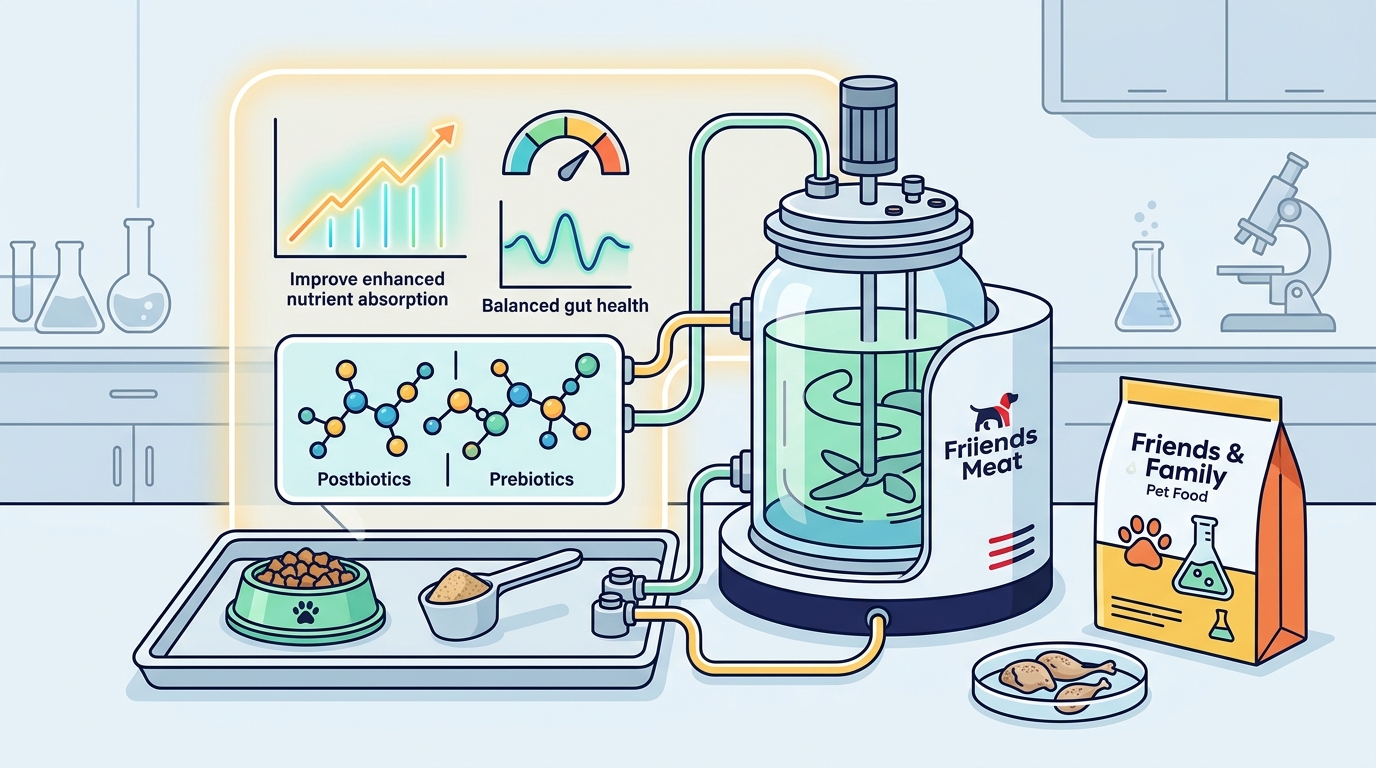
Prebiotics, Probiotics, and Postbiotics Explained
Understanding the three "biotics" helps you make smarter choices at the pet store.
Prebiotics
Prebiotics are non-digestible fibres that selectively stimulate the growth of beneficial gut bacteria. Common sources in pet nutrition include fructooligosaccharides (FOS), inulin, and mannan-oligosaccharides (MOS). At Friends & Family Pet Food, treats are formulated with a proprietary blend of prebiotic fibres chosen to support immunity and digestion.
Probiotics
Probiotics are live microorganisms that confer health benefits when consumed in adequate amounts. While effective, they can be unstable in processed pet foods due to sensitivity to heat and moisture.
Postbiotics
Postbiotics are preparations of inactivated microorganisms and their beneficial metabolites, as defined by the ISAPP in 2021. Unlike probiotics, they do not contain live organisms, which gives them greater stability and safety in pet food formulations. A 2026 randomised, placebo-controlled study found that a postbiotic supplement improved stool quality in dogs over 28 days while producing measurable shifts in gut microbiome composition. Friends & Family uses clinically validated postbiotics across its Teeth & Gum Care and Skin & Coat Glow product ranges.
Choose Highly Digestible Protein Sources
Protein quality directly influences how much work the gut has to do. Lean, minimally processed proteins with high bioavailability reduce digestive strain and improve nutrient uptake. Friends & Family Pet Food was founded on the idea that cultivated meat can improve the underlying protein cats and dogs eat by optimising it for their specific nutritional needs, resulting in higher levels of nutrients like taurine and Omega-3s along with improved digestibility.
Why Cultivated Meat Stands Out
Cultivated meat is real animal protein grown from cells rather than raised on a farm. It is free from antibiotics, hormones, and chlorine residues common in factory-farmed poultry. Friends & Family's Kampong Select freeze-dried snacks are a blend of cultivated poultry, prebiotics, and probiotics delivering upwards of 67% protein with high bioavailability. By minimally processing its products via freeze-drying, the company retains more nutrients and natural flavour.
Practical Steps to Improve Gut Health Today
1. Transition Foods Gradually
Sudden diet changes are a top cause of digestive upset. Mix new food with current food over 7 to 10 days, gradually increasing the ratio.
2. Add Prebiotic-Rich Treats
Treats containing prebiotic fibres feed the good bacteria already in your pet's gut. Friends & Family's Digestive Balance treats combine cultivated quail with a prebiotic yeast blend designed to support gut health and clear harmful bacteria.
3. Incorporate Postbiotic Support
Because postbiotics are shelf-stable and do not rely on live organisms surviving the digestive tract, they offer consistent, dose-to-dose performance. Research published in MDPI Veterinary Sciences found that postbiotic-containing products increased health-promoting metabolites such as propionate, acetate, and butyrate in canine gut models.
4. Ensure Adequate Hydration
Moisture-rich formats like bone broth or nutrient broths support digestion and hydration simultaneously. Friends & Family plans broth formats designed to deliver the same cultivated-meat nutrition in a liquid form your pet will love.
Biotic Ingredients at a Glance
| Feature | Prebiotics | Probiotics | Postbiotics |
|---|---|---|---|
| What they are | Non-digestible fibres | Live beneficial bacteria | Inactivated microorganisms and metabolites |
| Stability in pet food | High | Low (heat/moisture sensitive) | High |
| Primary gut benefit | Feed good bacteria | Add good bacteria | Deliver beneficial compounds directly |
| Common sources | FOS, inulin, MOS | Lactobacillus, Bifidobacterium | Fermentation-derived SCFAs, peptides |
| Ideal format | Treats, toppers | Refrigerated supplements | Freeze-dried treats, powders |
Key Takeaways
- The gut microbiome influences digestion, immunity, skin and coat health, and even mood.
- Prebiotics feed beneficial bacteria, probiotics add them, and postbiotics deliver their metabolites directly.
- Postbiotics offer superior stability over probiotics in processed pet foods and treats.
- Highly digestible, minimally processed protein sources like cultivated meat reduce digestive strain.
- Gradual food transitions and adequate hydration are simple yet powerful gut-health strategies.
- Clinical research in 2026 confirmed postbiotics can improve stool consistency and reshape the canine gut microbiome.
- Friends & Family Pet Food combines cultivated quail, prebiotics, and postbiotics in its freeze-dried treats for targeted digestive, skin, and oral health support.
Frequently Asked Questions
What is the gut microbiome in pets?
The gut microbiome is the community of trillions of microorganisms living in your pet's gastrointestinal tract. It influences digestion, nutrient absorption, immune function, and even behaviour.
Are postbiotics safe for dogs and cats?
Yes. Postbiotics are generally considered safe because they do not contain live organisms. They are suitable for dogs and cats of all life stages, including puppies, kittens, and seniors.
How do prebiotics differ from postbiotics?
Prebiotics are fibres that feed beneficial gut bacteria. Postbiotics are the beneficial metabolites and inactivated cell components produced through fermentation. Both support gut health through different mechanisms.
Can changing my pet's diet improve digestion?
Absolutely. Switching to a highly digestible, nutrient-dense protein source and adding prebiotic or postbiotic-enriched treats can significantly improve stool quality and nutrient absorption. Always transition gradually over 7 to 10 days.
What makes cultivated meat easier to digest?
Cultivated meat is grown from animal cells in a controlled environment, free from antibiotics and hormones. It can be optimised for higher bioavailability and nutrient density, placing less strain on the digestive system.
How long before I see digestive improvements?
Many pet parents notice firmer stools and improved energy within two to four weeks of consistent dietary changes. Clinical studies on postbiotic supplementation have shown measurable results by day 28.
Should I consult a vet before adding supplements?
Yes. While prebiotic and postbiotic ingredients are generally safe, a vet can help rule out underlying conditions and recommend appropriate dosages for your pet's size and health status.
Where can I find treats with prebiotics and postbiotics?
Friends & Family Pet Food offers freeze-dried cultivated quail treats formulated with prebiotics and clinically validated postbiotics. Browse the full range on the Friends & Family website or visit FAQs for more details.
Start Supporting Your Pet's Gut
Improving your pet's digestion naturally starts with better ingredients. Explore Friends & Family's Kampong Select freeze-dried treats made with cultivated quail, prebiotics, and postbiotics. Your pet's gut will thank you.