

Pet parents are paying closer attention than ever to what goes into their cats' and dogs' bowls. Cultivated meat is real animal protein grown from cells in a controlled environment rather than raised on a farm. For treats specifically, cultivated meat unlocks advantages that conventional protein simply cannot match, spanning nutrition, safety, sustainability and ethics. In this guide we break down the key benefits of cultivated treats, supported by peer-reviewed research and real-world data, so you can make an informed choice for your four-legged family member.
What Is Cultivated Meat?
Cultivated meat (also known as cultured or cell-based meat) is a new, alternative source of protein produced by growing animal cells in a bioreactor instead of raising and slaughtering whole animals. A small cell sample is placed in a nutrient-rich medium that supplies water, proteins, carbohydrates, fats, vitamins and minerals, replicating what happens naturally inside an animal's body.
The result is genuine animal tissue, nutritionally comparable or even superior to farm-raised meat, produced under sterile, controlled conditions. For pet food, the process is the same but formulated to meet the specific dietary needs of cats and dogs.
Nutritional Advantages for Cats and Dogs
Optimised Nutrient Profiles
One of the most compelling benefits is the ability to engineer the protein itself. Friends & Family Pet Food can optimise cultivated meat to contain higher levels of critical nutrients like taurine and Omega-3 fatty acids while improving digestibility and nutrient absorption. This means less reliance on synthetic supplementation and more bioavailable nutrition in every treat.
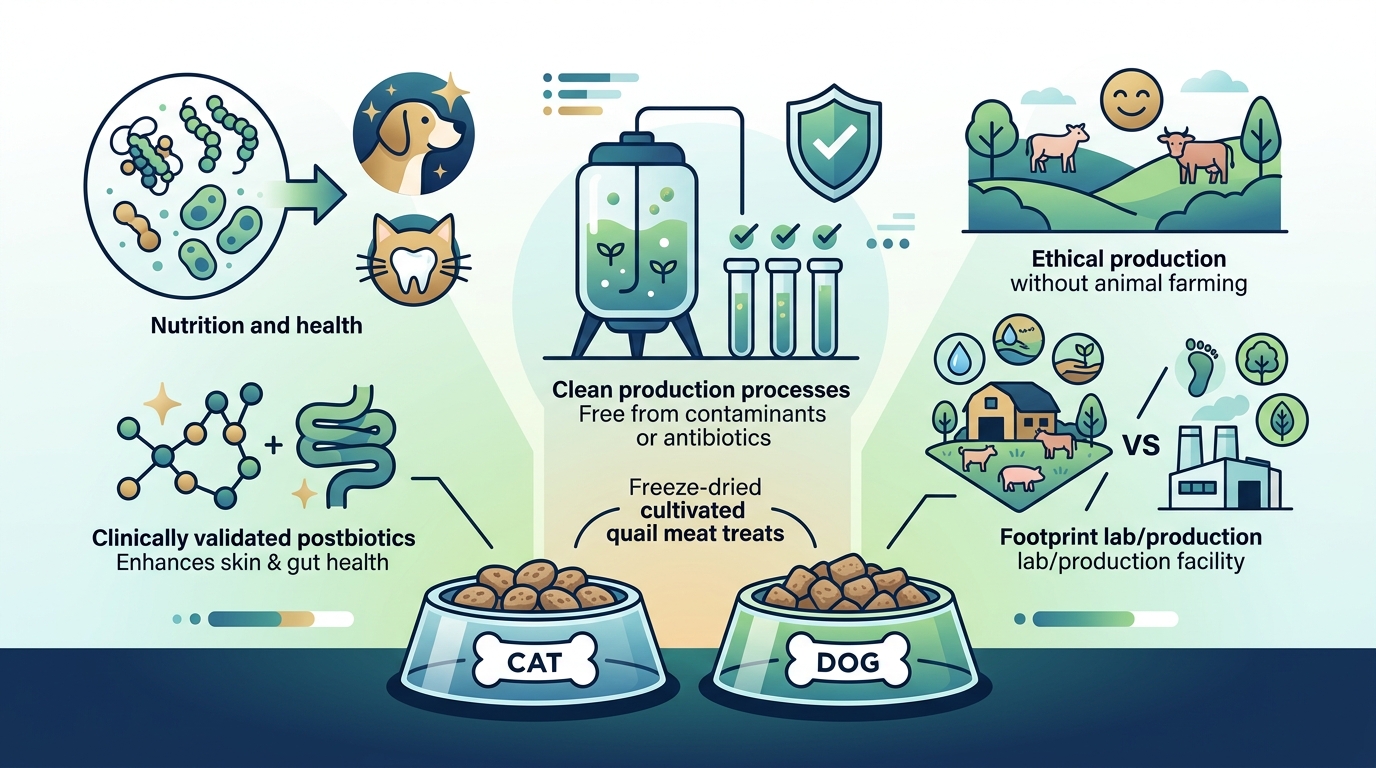
Prebiotics and Postbiotics Built In
Cultivated treats can be blended with clinically validated functional ingredients. For example, Kampong Select freeze-dried cultivated snacks include prebiotic fibres proven to support gut health and immunity, while additional SKUs deliver bioavailable trace minerals such as zinc and vitamins B, K and A to support longer lifespans.
Ancestral-Diet Alignment
Cultivated meat technology allows manufacturers to select cell lines from species that better align with the ancestral diets of cats and dogs. This novel approach may help reduce food sensitivities, since many pets develop allergies to proteins they did not evolve eating, such as chicken for dogs or tuna for cats.
Safety and Purity Benefits
Contamination is an underappreciated problem in conventional pet food. Cultivated meat is grown in a sterile environment entirely free of common pet food contaminants, including pathogenic bacteria such as E. coli and Salmonella, as noted by International Pet Food.
The antibiotic-free manufacturing process eliminates the risk of resistant bacteria entering the food chain. Friends & Family's cultivated poultry is produced without antibiotics, hormones, chlorine or any other additives that are commonplace in modern factory farming. Many fish-based pet foods also contain ethoxyquin, a preservative that does not need to be labelled, making cultivated alternatives a cleaner choice as highlighted on the Friends & Family FAQ page.
Environmental Impact
The environmental pawprint of pet food is substantial. Research from the Good Food Institute Europe indicates cultivated meat could cause up to 92% fewer climate emissions, reduce air pollution by up to 94% and use up to 90% less land than conventional beef.
Friends & Family's own data aligns with these figures: their cultivated meat pet treats produce roughly 90% fewer greenhouse gas emissions per unit compared to conventional beef-based pet treats, while requiring up to 90% less land and 78 to 96% less water. A third-party analysis of another cultivated pet food producer found just 1.73 kg of CO2 per kilogram of cultivated meat versus 21.28 kg for conventional beef by-products, as reported by Plant Based News.
Animal Welfare and Ethics
Animal welfare is a core reason pet owners explore cultivated options. Conventional pet food relies on industrial animal agriculture, and estimates suggest each dog or cat fed an average diet requires roughly 11 animal lives per year. Cultivated meat eliminates breeding, confinement and slaughter from the equation entirely.
This matters especially for ethically motivated pet owners who face what researchers call the "vegetarian's dilemma": wanting to avoid supporting factory farming while needing to provide animal protein, particularly for obligate carnivores like cats. Cultivated treats resolve this tension by delivering real meat without animal suffering.
Cultivated vs. Conventional Treats: Side-by-Side
| Factor | Cultivated Treats | Conventional Treats |
|---|---|---|
| Protein source | Real animal cells grown in bioreactors | Farm-raised livestock or by-products |
| Contaminants | Produced in sterile conditions; no pathogens | Risk of E. coli, Salmonella, ethoxyquin |
| Antibiotics | None used in production | Routine use in livestock farming |
| Nutrient customisation | Can be optimised (e.g., higher taurine, Omega-3s) | Fixed by animal genetics and diet |
| GHG emissions | Up to 92% lower than beef | High; pet food contributes 1.1 to 2.9% of agricultural emissions |
| Land use | Up to 90% less | Global pet food land use exceeds twice the area of the UK |
| Animal welfare | No animals bred or slaughtered | Billions of farm animals used annually |
Consumer Readiness and Market Momentum
Consumer appetite is growing. A PLOS ONE survey of 729 respondents found that 81.4% of people willing to eat cultivated meat themselves would also feed it to their pets. Interestingly, 56% of vegans and vegetarians who would not eat cultivated meat themselves said they would still feed it to their companion animals.
Regulatory milestones are accelerating too. Friends & Family Pet Food received approval from Singapore's Animal & Veterinary Services (AVS) in 2025, becoming the first cultivated meat pet food approved for sale in Asia. The company launched with eight SKUs and manufactures locally in Singapore, with plans to expand across Asia and into the United States.
Key Takeaways
- Cultivated meat is real animal protein grown from cells, offering the same (or better) nutrition as conventional meat without the drawbacks.
- Treats can be nutritionally optimised with higher taurine, Omega-3s, prebiotics and postbiotics built directly into the product.
- Sterile production eliminates common contaminants and removes antibiotics, hormones and chemical additives from the supply chain.
- Environmental benefits include up to 92% fewer emissions, 90% less land and up to 96% less water compared to conventional beef.
- Cultivated treats end the ethical trade-off of feeding pets real meat that relies on factory farming.
- Over 81% of consumers open to cultivated meat for themselves would also feed it to their pets.
- Friends & Family Pet Food is the first cultivated meat pet food company approved for sale in Asia, with products available in Singapore.
Frequently Asked Questions
What exactly is cultivated meat in pet food?
Cultivated meat is real animal flesh produced by taking a small sample of animal cells and growing them in a bioreactor with essential nutrients. The resulting tissue is nutritionally comparable to conventional meat but produced without farming or slaughter.
Is cultivated meat safe for cats and dogs?
Yes. Cultivated meat is grown under sterile, controlled conditions free from pathogenic bacteria, antibiotics and common contaminants. In principle, cultivated meat can be both safe for long-term consumption and nutritionally adequate, with potential for nutritional enhancement beyond conventional meat.
Are cultivated treats more nutritious than regular pet treats?
They can be. Because the protein is grown in a controlled environment, manufacturers like Friends & Family Pet Food can optimise nutrient levels, including taurine and Omega-3 fatty acids, and add functional ingredients such as prebiotics and postbiotics.
How do cultivated treats help the environment?
Peer-reviewed research suggests cultivated meat could reduce greenhouse gas emissions by up to 92%, land use by up to 90% and air pollution by up to 94% compared to conventional beef production.
Do cats and dogs enjoy the taste of cultivated treats?
Early consumer research suggests few pet owners expect cultivated food to taste worse than conventional options. Products like Friends & Family's Kampong Select treats are freeze-dried for palatability and formulated to meet species-specific taste preferences.
Where can I buy cultivated treats for my pet?
Friends & Family Pet Food currently sells cultivated treats in Singapore following regulatory approval from the country's Animal & Veterinary Services. The company plans to expand across Asia and to the United States. Visit the contact page to stay updated on availability.
Is cultivated pet food regulated?
Yes. Cultivated pet food must receive regulatory approval before it can be sold commercially. Friends & Family received approval from Singapore's AVS in 2025. Other companies like Meatly have received clearance in the UK.
How is cultivated meat different from plant-based pet food?
Plant-based pet food uses non-animal ingredients such as legumes, fungi or algae. Cultivated meat is actual animal tissue grown from real cells, providing the complete amino acid profile that obligate carnivores like cats require without relying on plant substitutes.
Ready to Try Cultivated Treats?
Give your cat or dog the nutrition of real meat without the downsides. Explore Friends & Family's Kampong Select cultivated snacks and see what better meat looks like for your pet.