

Your pet's oral health is more than just fresh breath. Periodontal disease is the most common clinical condition in adult cats and dogs, and by age three, the majority already show early signs of it. The good news is that the right treats can play a meaningful role in reducing plaque, supporting healthy gums, and even targeting harmful oral bacteria. In this guide, we break down which treats actually work, what ingredients to look for, how postbiotics are changing the game, and why cultivated meat treats with functional ingredients offer a smarter approach to your pet's dental care routine.
Why Oral Health Matters for Cats and Dogs
According to the American Veterinary Medical Association (AVMA), periodontal disease is the most common dental condition in dogs and cats. By age three, most pets already show early evidence of it. Left untreated, bacteria from infected gums can enter the bloodstream and affect the heart, liver, and kidneys.
Dental health is an important part of a pet's overall health, which is why prevention through daily care, including the right treats, is essential. Regular veterinary checkups remain critical, but what happens between visits matters just as much.
How Treats Help Clean Your Pet's Teeth
Dental treats work through two primary mechanisms: mechanical abrasion and functional ingredients.
Mechanical Action
The simple act of chewing helps scrape plaque off tooth surfaces. Treat geometry matters significantly. Ridges, grooves, and textured surfaces are deliberately engineered to create a gentle cleaning action as pets chew. Kibble density also plays a role, with lower-density treats allowing teeth to sink in rather than shatter the treat.
Functional Ingredients
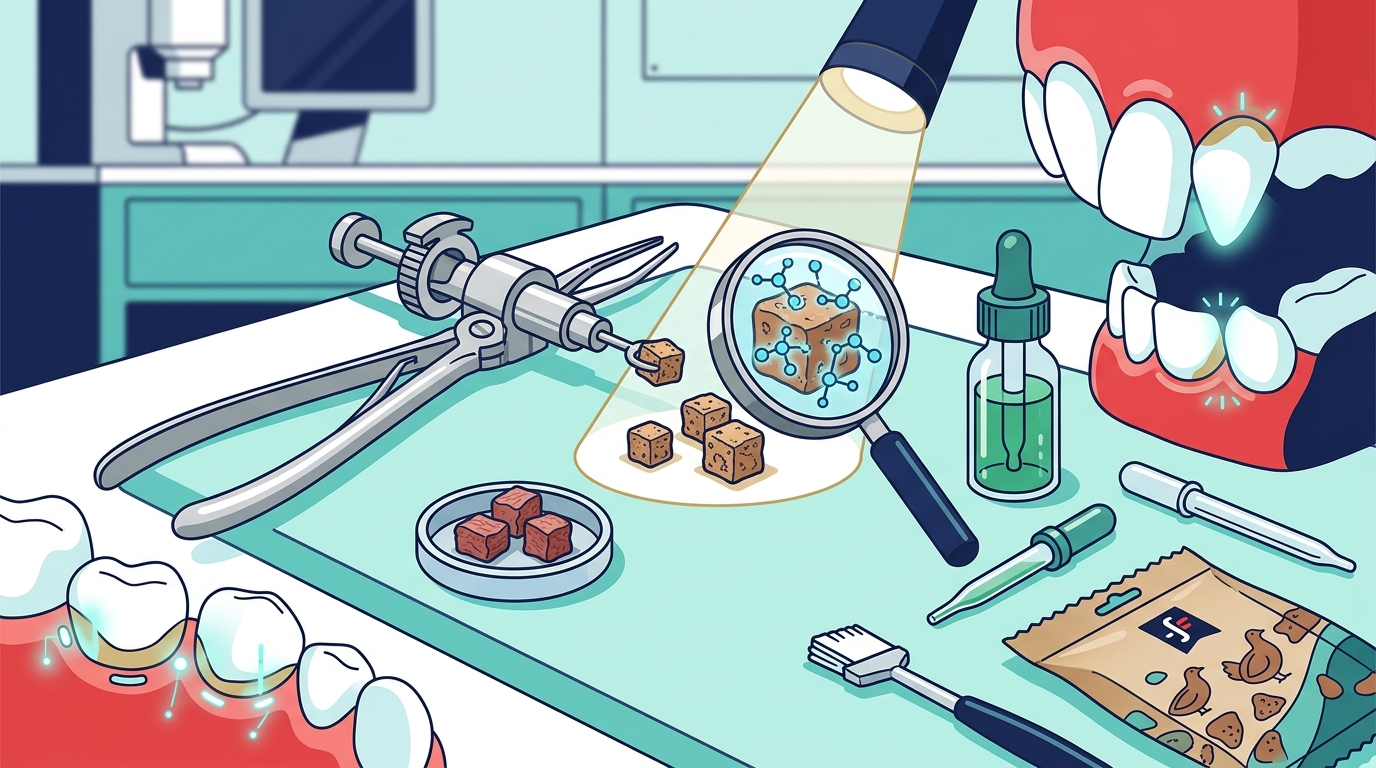
Some treats go beyond abrasion by including enzymes, prebiotics, or postbiotics that actively target oral bacteria. These ingredients can disrupt biofilms, reduce volatile sulfur compounds (the cause of bad breath), and support a healthier oral microbiome. Treats with added dental ingredients like enzymes offer extra benefits for keeping teeth clean and gums healthy.
Saliva Stimulation
Longer chewing times stimulate saliva production. Saliva naturally washes away food particles and bacteria, neutralizes acids, and helps repair tooth enamel. This is why treats designed to last longer during chewing sessions provide compounding oral health benefits.
Types of Treats That Support Oral Health
Not every treat labeled "dental" delivers real results. Here is a comparison of the main categories:
| Treat Type | Primary Mechanism | Best For | Limitations |
|---|---|---|---|
| Textured dental chews | Mechanical abrasion via ridges and grooves | Dogs that enjoy prolonged chewing | May not reach below the gumline |
| Enzyme-coated treats | Enzymatic breakdown of plaque | Pets with moderate plaque buildup | Effectiveness varies by formulation |
| Freeze-dried meat treats with postbiotics | Functional ingredients targeting oral microbiome | Cats and dogs; works regardless of chewing style | Newer category; fewer products available |
| Dental water additives | Chemical agents in drinking water | Pets that resist chewing treats | No mechanical cleaning benefit |
| Prescription dental diets | Specially formulated kibble size and texture | Pets with diagnosed dental conditions | Requires veterinary guidance |
Postbiotics: The New Frontier in Pet Oral Care
Postbiotics are preparations of inanimate microorganisms and their components that confer a health benefit on the host, as defined by the International Scientific Association of Probiotics and Prebiotics (ISAPP). Unlike probiotics, postbiotics are not alive, making them shelf-stable and easier to incorporate into pet treats and foods.
Research is demonstrating their potential for oral health. A 2025 clinical trial published in Animals found that a postbiotic powder topper reduced volatile sulfur compounds in dogs by 27% compared to placebo within just seven days. Another study by ADM showed that heat-treated Lactiplantibacillus plantarum delivered a significant 10% reduction in dental plaque accumulation over 57 days.
This matters because most traditional dental chews rely solely on mechanical abrasion. Postbiotics address the underlying microbial causes of bad breath and plaque, rather than merely masking symptoms. For pet parents whose cats or dogs resist chewing, postbiotic-enhanced treats and toppers work through the digestive system and saliva, meaning the benefit does not depend on how the pet eats.
Friends & Family Pet Food includes clinically validated postbiotics in its freeze-dried cultivated treats, designed to support skin, coat, and oral health in one daily serving.
What to Look for When Choosing Oral Health Treats
With hundreds of dental treats on the market, here is how to separate effective products from marketing noise:
Check for the VOHC Seal
The Veterinary Oral Health Council (VOHC) is an independent body that reviews clinical trial data to certify products that meet standards for reducing plaque or tartar. The VOHC Seal of Acceptance is the only objective benchmark for dental products in pets. If a treat carries this seal, someone has actually verified the claims.
Prioritize Natural, Digestible Ingredients
Look for treats made from high-quality protein sources without artificial preservatives, colors, or excessive calories. Choosing treats with natural, digestible ingredients helps avoid food sensitivities and supports overall wellness. Cultivated meat treats from Friends & Family are free from antibiotics, hormones, and chlorine, offering a cleaner protein source.
Match Treat Size to Your Pet
A treat that is too hard could risk damaging teeth, while one that is too soft may not clean effectively. Always check packaging for weight-range guidance and factor treat calories into your pet's daily intake to prevent unnecessary weight gain.
The Cultivated Meat Advantage for Dental Treats
Cultivated meat is real animal protein grown from cells without conventional farming. It is a category that Friends & Family Pet Food pioneered in Asia, becoming the first cultivated meat pet food approved for sale in Singapore in 2025.
Why does this matter for oral health? Cultivated meat can be optimized at the cellular level for higher levels of nutrients pets need, including taurine and Omega-3 fatty acids, with improved digestibility and nutrient absorption. When combined with functional ingredients like prebiotics and postbiotics, the result is a treat that serves multiple health goals simultaneously: dental care, gut health, skin and coat support.
Friends & Family's Kampong-inspired treats draw from heritage bird nutrition profiles, delivering lean, protein-rich meat alongside prebiotic fibers and bioavailable minerals like zinc and vitamins B, K, and A. Explore the full cultivated treat collection to find the right fit for your cat or dog.
Key Takeaways
- Periodontal disease affects most cats and dogs by age three, making daily preventive care essential.
- Effective dental treats combine mechanical chewing action with functional ingredients like enzymes or postbiotics.
- Postbiotics represent a breakthrough approach, targeting harmful oral bacteria at the microbial level rather than relying on abrasion alone.
- Clinical studies show postbiotic ingredients can reduce bad breath compounds by up to 27% and dental plaque by 10%.
- Always look for the VOHC Seal of Acceptance when evaluating dental treat claims.
- Cultivated meat treats offer a cleaner protein source that can be optimized for higher nutrient levels alongside oral health benefits.
- Dental treats are a supplement to, not a replacement for, regular brushing and professional veterinary cleanings.
Frequently Asked Questions
What types of treats help improve my pet's oral health?
Textured dental chews, enzyme-coated treats, and freeze-dried treats with postbiotics all support oral health. The most effective options combine mechanical cleaning action with functional ingredients that target plaque-causing bacteria. Look for products carrying the VOHC Seal of Acceptance for verified efficacy.
Can dental treats replace brushing my pet's teeth?
No. Dental treats enhance your oral care routine but do not replace brushing. Brushing remains the single most effective way to remove plaque, especially along the gumline where treats may not reach. Use treats as a daily complement to brushing and professional cleanings.
What are postbiotics and how do they help pet dental health?
Postbiotics are preparations of inanimate (non-living) microorganisms and their metabolites that deliver health benefits. In pet oral care, specific postbiotic strains have been clinically shown to reduce volatile sulfur compounds responsible for bad breath and to inhibit dental plaque formation, offering benefits that do not depend on mechanical chewing.
How often should I give my pet dental treats?
Most dental treats are designed for daily use, typically one per day. Always check the packaging for serving guidance based on your pet's weight and factor the calories into their total daily intake. Consult your veterinarian if your pet is on a restricted diet.
Are cultivated meat treats safe for my pet?
Yes. Cultivated meat is real animal protein produced without conventional farming. Friends & Family Pet Food received regulatory approval from Singapore's Animal & Veterinary Services in 2025, and their products are free from antibiotics, hormones, and harmful preservatives. Visit the Friends & Family FAQ page for more details on safety and ingredients.
What is the VOHC Seal and why does it matter?
The VOHC Seal of Acceptance is awarded by the Veterinary Oral Health Council, an independent body that reviews clinical trial data to determine whether a product meets standards for reducing plaque or tartar. It is the only objective benchmark for evaluating dental health claims on pet products.
Do cats benefit from dental treats the same way dogs do?
Cats can benefit from dental treats, though many cats swallow treats without prolonged chewing. This is why postbiotic-based products that work through the digestive system and saliva are particularly valuable for cats, as the oral health benefit does not depend on chewing behavior.
What makes Friends & Family treats different for oral health?
Friends & Family Pet Food combines cultivated quail meat with clinically validated postbiotics and prebiotic fibers in freeze-dried treats. This delivers oral health support alongside skin, coat, and gut benefits in a single daily treat, using a protein source optimized at the cellular level for pet nutrition.
Support Your Pet's Smile Every Day
Ready to give your cat or dog a treat that works harder for their health? Explore the full range of cultivated meat treats with clinically validated postbiotics from Friends & Family Pet Food.