

Pet parents are always looking for healthier, more sustainable ways to feed their furry family members. Cultivated meat treats represent a breakthrough in pet nutrition, offering real animal protein grown from cells rather than raised on a farm. With companies now selling these products in Singapore, the UK, and the EU, this guide covers everything you need to know about cultivated meat treats for dogs and cats, from the science behind them to the brands leading the way.
What Is Cultivated Meat?
Cultivated meat is real animal protein produced by growing animal cells in a controlled environment, without the need for slaughter. According to the Good Food Institute, the industry has grown to over 140 companies on six continents, backed by more than $3.4 billion in investment as of 2025.
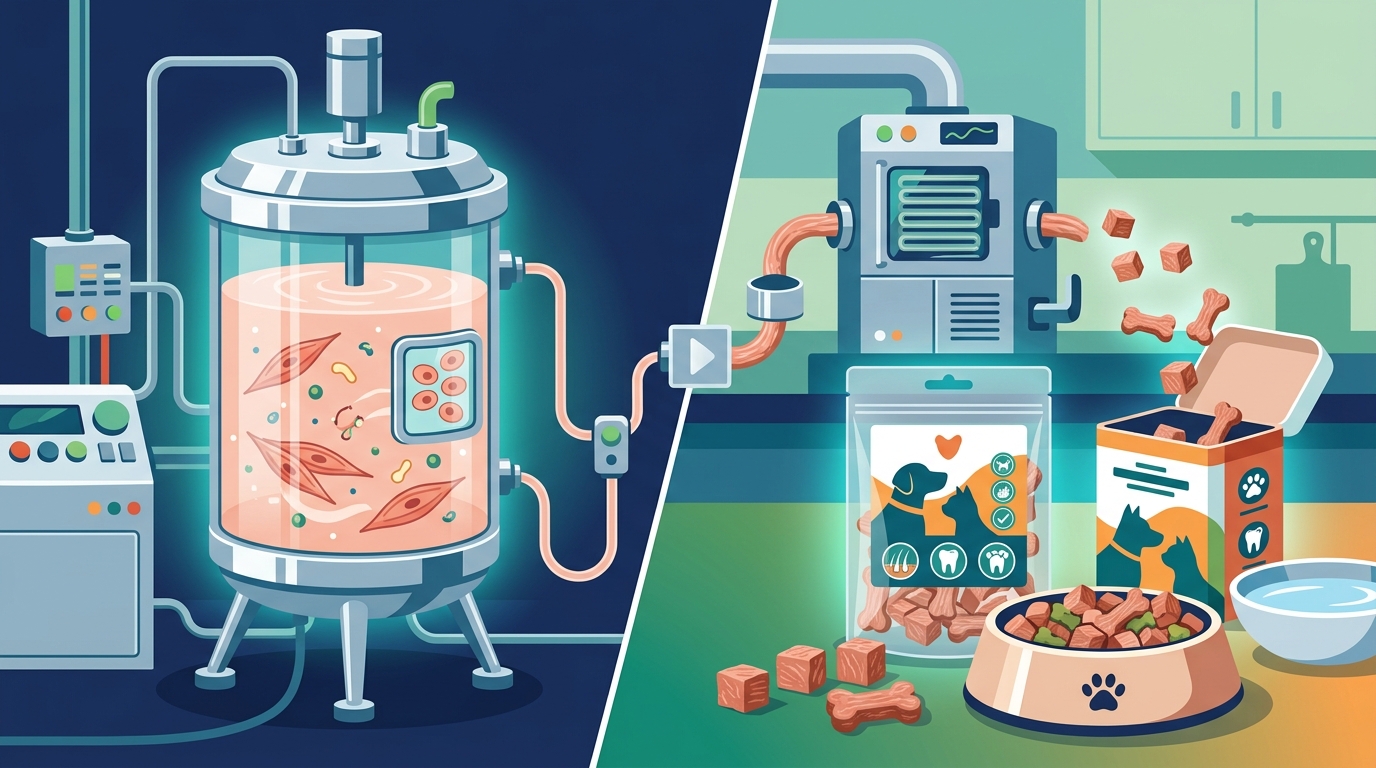
A bioreactor is a vessel that provides cells with ideal conditions for growing and multiplying, similar to what occurs naturally inside an animal. Cells are fed an oxygen-rich culture medium containing amino acids, glucose, vitamins, and minerals. The result is genuine meat tissue that is nutritionally comparable to conventional protein.
How Is It Different from Plant-Based Food?
Cultivated meat is not the same as plant-based meat, which is produced directly from plants without any animal protein. While plant-based options use ingredients like pea or soy to mimic meat textures, cultivated meat delivers the same amino acid profile as traditional animal protein because it is animal protein, just grown differently.
How Cultivated Treats Are Made
The production process starts with a small cell sample, often taken from an egg or a tissue biopsy. Those cells are placed into a bioreactor where temperature, acidity, and nutrients are carefully controlled. Over two to eight weeks, the cells multiply and mature into muscle and fat tissue.
For pet treats specifically, the harvested meat is then blended with functional ingredients like prebiotics or postbiotics and formed into formats pets love. Freeze-dried cultivated snacks, for example, preserve nutrients without artificial preservatives while giving treats a crunchy texture cats and dogs enjoy.
Why Freeze-Drying Matters
Freeze-drying is a gentle preservation method that removes moisture at low temperatures, locking in nutrition and flavour. It is one of the fastest-growing formats in pet food globally, with 15% of new North American launches in 2025 carrying a freeze-dried, air-dried, or baked claim, according to Petfood Industry.
Benefits for Dogs and Cats
Cultivated meat allows manufacturers to optimise the nutritional profile of the protein itself. At Friends & Family Pet Food, the goal is to make better meat with higher levels of crucial nutrients pets need, meaning less supplementation is necessary.
Optimised Nutrition
Because cultivated meat is grown under precise conditions, it can contain higher levels of taurine, Omega-3 fatty acids, iron, zinc, and vitamin B12 compared to conventional poultry from factory farms. This is especially meaningful for cats, who are obligate carnivores with strict amino acid requirements.
Functional Ingredients
Many cultivated treats pair the protein with clinically validated postbiotics for targeted health benefits. Friends & Family's product lines include formulas for skin and coat health, oral care, digestive balance, and pure protein supplementation.
Novel Protein Advantage
A novel protein is a protein source that a pet has not previously been exposed to, reducing the likelihood of food sensitivities. Cultivated quail qualifies as a novel protein for the vast majority of dogs and cats, making it suitable for pets with common chicken or beef allergies.
Sustainability Impact
One of the strongest arguments for cultivated meat in pet food is its environmental footprint. Research cited by Friends & Family estimates that cultivated meat pet treats produce roughly 90% fewer greenhouse gas emissions per unit compared to conventional beef-based treats. Production also requires up to 90% less land and 78 to 96% less water than traditional livestock farming.
| Metric | Conventional Beef | Cultivated Meat |
|---|---|---|
| GHG Emissions | Baseline | Up to 90% lower |
| Land Use | Baseline | Up to 90% lower |
| Water Use | Baseline | 78–96% lower |
| Antibiotic Use | Common in farming | Not required |
A life-cycle assessment of BeneMeat's protein showed a carbon footprint of 3.3 to 6.6 kg CO2e, which is 95% lower than beef and 55% lower than pork at current rates.
The Cultivated Pet Food Market in 2026
The cultivated pet food space has moved rapidly from laboratory concept to retail reality. Here are the key milestones:
- February 2025: Meatly launched the world's first cultivated meat pet food, "Chick Bites," at a Pets at Home store in London.
- July 2025: Friends & Family Pet Food received regulatory approval from Singapore's Animal & Veterinary Services, becoming the first cultivated meat pet food approved for sale in Asia.
- April 2026: Friends & Family launched 12 SKUs across four functional lines in Singapore retail stores, marking the first ongoing commercial sale of cultivated pet food globally and the first cultivated products for cats.
- May 2026: FORZA10 and BeneMeat introduced Coolty Meat, a complete wet dog food with cultivated meat, at Interzoo in Nuremberg.
Consumer openness is also growing. According to industry data, 36% of pet owners say they would consider feeding their pets cultivated meat, and nearly 88% of participants in BeneMeat's European Try & Share trial reported that their dogs liked the cultivated treats.
What to Look for in Cultivated Treats
Not all cultivated treats are created equal. When evaluating products, consider the following:
- Cultivated meat as the first ingredient: Friends & Family products include cultivated meat as the first ingredient by volume, with inclusion levels up to 70%.
- Functional add-ons: Look for postbiotics, prebiotics, or nutritional yeast that deliver specific health benefits beyond basic nutrition.
- Regulatory approval: Ensure the product has been approved by the relevant food safety authority in your country.
- Transparent sourcing: The best brands explain their cell sourcing, production process, and ingredient lists clearly. Visit the Friends & Family FAQs page for a good example.
Key Takeaways
- Cultivated meat is real animal protein grown from cells in a bioreactor, not a plant-based substitute.
- Cultivated treats can be nutritionally optimised with higher taurine, Omega-3s, and essential minerals.
- Environmental benefits include up to 90% less land, water, and greenhouse gas emissions versus conventional meat.
- Friends & Family Pet Food launched the first cultivated meat treats for cats and dogs in Asia in 2026.
- 36% of global pet owners say they would consider cultivated meat for their pets.
- Freeze-dried formats preserve nutrients without artificial preservatives and are one of the fastest-growing pet food segments.
- Look for products with cultivated meat listed as the first ingredient and clinically validated functional ingredients.
Frequently Asked Questions
What exactly are cultivated meat treats for pets?
Cultivated meat treats are pet snacks made with real animal protein that has been grown from animal cells in a controlled environment. They are not plant-based or synthetic. The cells are nurtured in a bioreactor and then processed into treat formats like freeze-dried bites or broths.
Are cultivated meat treats safe for dogs and cats?
Yes. In Singapore, Friends & Family Pet Food received regulatory approval from the Animal & Veterinary Services authority before commercial sale. In the UK, Meatly worked with the Food Standards Agency. These products undergo rigorous safety evaluations before reaching consumers.
How do cultivated treats differ from conventional pet treats?
The key difference is how the protein is produced. Conventional treats rely on meat from farmed or slaughtered animals. Cultivated treats use the same type of animal cells but grow them outside the animal, allowing for a cleaner, more controlled, and more sustainable production process.
What species of meat is used in cultivated pet treats?
It varies by brand. Friends & Family Pet Food uses cultivated quail, inspired by heritage Kampong birds of Southeast Asia. Other companies use cultivated chicken. Quail serves as a novel protein, which is beneficial for pets with common food sensitivities.
Where can I buy cultivated meat treats today?
As of 2026, cultivated pet treats are available at retail in Singapore through Friends & Family Pet Food and its retail partner Vanillapup Pet Supplies. In Europe, BeneMeat and FORZA10 plan retail availability for Q3 2026. Check your local regulatory status as availability varies by country.
Are cultivated pet treats more expensive than regular treats?
Cultivated treats currently sit at a premium price point, similar to other specialty and functional pet foods. However, as production scales and bioreactor technology improves, costs are expected to decline significantly.
Do cats and dogs actually like the taste?
Evidence so far is positive. In BeneMeat's European trial with 350 dog owners, nearly 88% reported their dogs liked the treats and over 83% rated them as good as or better than conventional alternatives. Friends & Family's products sold out at the Singapore Pet Expo before their retail launch.
Is cultivated meat better for the environment than conventional pet food?
Substantially. Research estimates up to 90% lower greenhouse gas emissions, 90% less land use, and 78 to 96% less water consumption compared to conventional livestock farming. It also eliminates the need for antibiotics commonly used in factory farming.
Try the Future of Pet Nutrition
Ready to give your pet something genuinely different? Explore the full range of cultivated quail treats and broths from Friends & Family Pet Food. From skin and coat care to digestive support, every product is crafted with real cultivated meat and clinically validated postbiotics. Get in touch or browse the collection to find the right fit for your dog or cat.